Skip to content

When Kenyans debate how to power the country’s growth, a common question is: should we invest more in geothermal or in solar? Both are renewable, both are low-carbon and both are abundant in Kenya. Geothermal is a long-established strength, with installed capacity reported to have passed about 1,000 MW in 2026, while solar is expanding quickly in homes, farms, businesses and utility-scale projects.
The honest answer is that they do different jobs, and the best energy mix uses both. This article compares them on the factors that matter, explains how each fits into Kenya’s grid and off-grid needs and highlights where geology and site conditions play a role. Where figures are given, they are typical ranges, and actual values depend on the project, so check current data for specific decisions.
How Each Technology Works
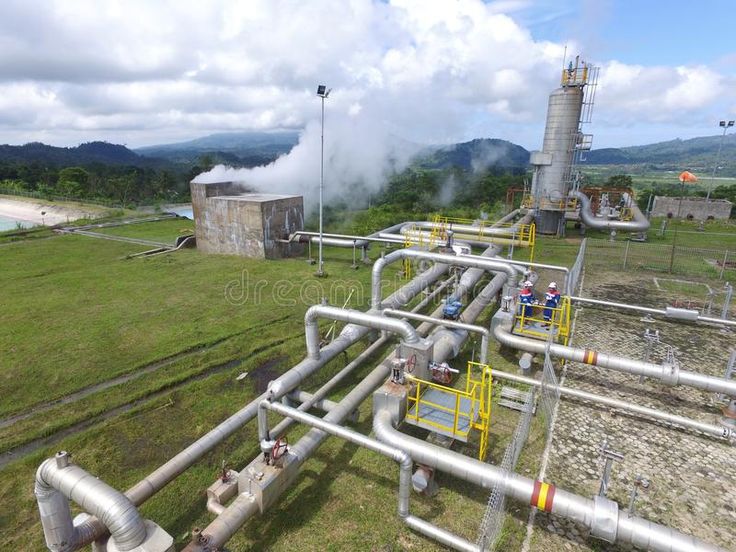
Geothermal power. Wells are drilled into hot rock and fluid, typically one to three kilometres deep in Kenya’s rift fields. Steam or hot water is brought to the surface and used to spin a turbine connected to a generator. The cooled fluid is injected back underground (reinjection) to sustain the reservoir. Output depends on the reservoir’s temperature, permeability and the number of productive wells. See our articles on geothermal exploration and geothermal energy in Kenya.
Solar photovoltaic (PV) power. Panels convert sunlight directly into electricity. Output follows the sun, so it rises through the morning, peaks around midday and drops to zero at night, and varies with cloud cover and dust. Solar can be installed at any scale, from a rooftop kit to a utility-scale solar farm, and can be paired with batteries for storage. Solar thermal systems (heating water) are another use of the sun but are separate from PV.
Head-to-Head Comparison
1. Reliability and capacity factor. The capacity factor is the share of the year a plant actually produces energy compared with running at full rated power continuously.
- Geothermal typically has a very high capacity factor, often above 80 to 90 percent, because it runs continuously except for maintenance. It is baseload power: steady, around the clock, in all seasons.
- Solar PV capacity factors depend on location and technology, but in sunny regions such as much of Kenya they are typically in the range of around 20 to 30 percent, because panels produce only in daylight. Solar output is variable and needs storage or complementary generation to supply evening and night demand.
This difference is fundamental: one megawatt of geothermal produces several times more annual energy than one megawatt of solar.
2. Timing and match to demand. Kenya’s grid has an evening peak when people return home, cook and use lighting, after the sun has set. Geothermal supplies that peak directly. Solar produces its energy in the middle of the day, which suits daytime industrial and commercial loads and irrigation pumping, but needs batteries or other sources for the evening peak. As solar penetration grows, grid operators must manage the midday surplus and the evening ramp.
3. Cost. Cost comparisons are complicated and depend on location, financing and what is counted.
- Solar PV has seen sharp global cost declines, and solar projects typically have lower upfront cost per megawatt than geothermal and can be built in months, but the energy cost per kilowatt-hour should account for the lower capacity factor and for storage or backup if firm supply is needed.
- Geothermal has high upfront and exploration costs per megawatt, because of drilling, but low running costs and very long project life. Once the field is developed, the fuel (heat) is free, and the cost per kilowatt-hour of baseload power can be competitive and stable.
- Cost of firm power. When solar must be paired with batteries to deliver around-the-clock power, the total system cost rises. Geothermal’s firm output is built in.
Levelised cost estimates change frequently with equipment prices, interest rates and project specifics, so use current, project-specific figures.
4. Speed and scale of deployment.
- Solar can be deployed quickly, often within a year for utility projects and within days for small systems, and it scales in small increments.
- Geothermal takes years: exploration, drilling, plant construction and grid connection. Projects tend to be large, though wellhead units and modular plants can accelerate early generation. Menengai’s phased development, with plants of 35 MW each, shows how scale can be built up gradually.
5. Risk profile.
- Geothermal carries resource risk before and during drilling, as a well may not be productive. After the field is proven, operational risk is moderate and predictable. Early-stage risk can be reduced with good science, public drilling (as with GDC at Menengai) and risk-mitigation funding.
- Solar has little resource uncertainty, since sunshine is well characterised, but has performance, curtailment and grid integration risks, and its value depends on storage and grid capacity.
6. Land and environmental footprint.
- Geothermal has a small surface footprint per unit of energy, but involves drilling pads, pipelines, power plants, roads and sometimes sensitive locations such as protected areas. Impacts include gas emissions (CO2, H2S), water use, noise, brine management, and potential effects on groundwater and surface water if not managed. Reinjection and monitoring are essential.
- Solar requires considerable land for utility-scale projects (several hectares per megawatt), which can compete with agriculture or grazing, and has potential impacts on habitats, drainage and soil erosion. Rooftop and brownfield solar avoid many of these issues. Manufacturing and end-of-life panel recycling should be considered. See our article on geotechnical and geological considerations for solar sites.
7. Water use. Geothermal plants use water for cooling (depending on technology) and for steam, though much of the fluid comes from the reservoir. Solar PV uses little water except for panel cleaning, which matters in dry, dusty areas where boreholes may supply cleaning water.
8. Carbon emissions. Both are low-carbon compared with fossil fuels. Geothermal emissions vary by field and technology, and can be reduced through reinjection and gas capture. Solar emissions are mainly from manufacturing and are low over its lifetime.
9. Location constraints.
- Geothermal is site-specific: high-temperature resources are found only where geology permits, such as the Rift Valley. Transmission lines may be needed to bring power to load centres. Direct heat uses must be near the resource.
- Solar is widely available across Kenya, particularly in arid and semi-arid north and east, but transmission capacity is needed if large solar farms are far from demand.
10. Applications beyond electricity.
- Geothermal supplies heat directly for greenhouses, drying, food processing, cooling and spa uses, and can provide steam for industrial processes such as green ammonia and fertiliser (see our direct-use and green hydrogen articles).
- Solar supports electricity for homes and businesses, solar water pumping for farms and boreholes (see our solar borehole pumping article), mini-grids and solar thermal heating.
Summary Table
| Factor | Geothermal | Solar PV |
|---|---|---|
| Output pattern | Continuous baseload | Daytime, variable |
| Typical capacity factor | High (often above 80 to 90 percent) | Roughly 20 to 30 percent in sunny regions |
| Upfront cost per MW | High (drilling-intensive) | Lower |
| Development time | Years | Months to a year or so |
| Resource risk | High at exploration stage | Low |
| Location | Rift-specific | Widespread |
| Land per MWh | Small | Larger |
| Storage needed for firm supply | No | Yes (batteries or other firm sources) |
| Non-electric uses | Direct heat, industrial steam | Solar pumping, off-grid power, solar heating |
How They Fit Together in Kenya’s Grid
Kenya already enjoys an electricity mix in which most power comes from renewable sources, including geothermal, hydropower, wind and solar. Within this mix:
- Geothermal provides the firm backbone, meeting steady demand and the evening peak, and reducing reliance on thermal (fossil) plants.
- Hydropower provides flexible capacity but varies with rainfall and is sensitive to droughts.
- Wind (such as in northern Kenya) adds energy at windy times, often in the evenings and at night, complementing solar.
- Solar adds low-cost daytime energy and can be deployed rapidly to meet demand growth, particularly for commercial and industrial users, and for irrigation.
- Batteries and flexible generation help smooth variability.
An energy plan that leans entirely on one source would be less resilient. For example, an overdependence on solar would require large storage investments to manage evenings and cloudy periods, while building only geothermal would leave the system without the fast, modular additions that solar provides and would concentrate risk in a few geological areas and transmission corridors.
Off-Grid and Distributed Use: Solar’s Strength
Millions of Kenyans and many farms, schools, health centres and businesses operate off the main grid or with unreliable supply. For them, solar is often the practical choice, because it can be installed at the point of use, from small home systems to mini-grids and solar pumping systems for boreholes and irrigation. In arid regions such as northern Kenya, where grid extension is costly, solar is central to water supply and community services.
Geothermal is a centralised resource, best suited to grid supply and to industries and farms that can locate near the resource (for example, greenhouse farms and processing plants in the Naivasha and Nakuru areas using geothermal heat).
Considerations for Businesses and Farms
If you are a business or farm deciding between solar and grid power (which already includes geothermal):
- Solar PV for self-supply can cut daytime electricity costs, particularly for irrigation pumps, cold rooms and processing equipment, and may be paired with batteries or the grid for reliability.
- Grid power with a high geothermal share offers reliability and low-carbon supply without capital investment, subject to tariffs and grid quality.
- Direct geothermal heat may offer large savings for heat-intensive operations located near geothermal fields, such as greenhouse heating and drying.
- Hybrid solutions often work best: solar for daytime load, grid or generator for backup, and efficiency measures to reduce demand.
For borehole-based water supply, solar pumping is now widely used, and sizing should be based on a proper hydrogeological pumping test, as we explain in our solar borehole pumping article.
Geological Considerations for Both
Both technologies depend on geology, in different ways:
- Geothermal depends on deep geology: heat sources, permeability and fluid. Exploration relies on structural geology, geochemistry and geophysics.
- Solar depends on near-surface geology and geotechnics: soil conditions for foundations, corrosivity, slope stability, flood risk, water availability for cleaning and ground conditions for cable trenches and earthing. Poor ground investigation can raise costs and cause failures, as discussed in our solar site assessment article.
Hazards such as faults, volcanic activity and flooding in the Rift Valley affect both.
Policy and Planning Perspectives
Good energy planning for Kenya considers:
- Least-cost, reliable supply that meets demand growth, with enough firm capacity.
- Grid expansion and stability, including transmission for geothermal fields and solar areas, and tools to manage variable generation.
- Risk mitigation for geothermal exploration and streamlined permitting for both technologies.
- Local benefits and fair land use, particularly for communities near geothermal fields and large solar farms.
- Water, environmental and social safeguards.
- Industrial strategy, using firm renewable power and heat to attract industries such as fertiliser, data centres and agro-processing.
- Skills development in geoscience, engineering and construction.
Frequently Asked Questions
Is geothermal cheaper than solar? It depends. Solar has lower upfront cost and falling prices, while geothermal offers firm baseload power at stable cost. For round-the-clock supply, geothermal is highly competitive, but a fair comparison must include storage or backup for solar.
Can solar replace geothermal in Kenya? Not entirely without large storage and grid upgrades. They complement each other.
Why not build only geothermal, since it is more reliable? Geothermal can only be developed in specific places, needs years and high upfront capital and carries exploration risk. Solar adds speed, flexibility and distributed supply.
Which is better for a farm? For irrigation and daytime loads, solar is usually practical. For heat-intensive operations near geothermal fields, direct geothermal heat can be very attractive. Many farms use both grid power (with geothermal in the mix) and solar.
Does geothermal harm Lake Naivasha? Impacts depend on how development is planned and managed. Monitoring groundwater, controlling waste, protecting recharge areas and engaging communities are important.
Which has the lower carbon footprint? Both are low-carbon. Exact lifecycle emissions depend on the field, technology and manufacturing.
Conclusion
Geothermal and solar are not rivals so much as partners. Geothermal supplies steady, firm power and heat from Kenya’s rift geology, while solar offers fast, flexible, widely available energy for the grid and for off-grid users. A resilient, affordable and low-carbon energy mix will use both, backed by hydropower, wind, storage, strong transmission and careful planning that respects communities and ecosystems.
For geological and geotechnical input into energy and water projects, contact Reg. Geol. Mbugua Githae (MGSK) via consult.innercoregeoconsultants.co.ke.