Skip to content

A groundwater abstraction permit, also called a water use permit, is legal authorisation from the Water Resources Authority (WRA) to extract a specified volume of groundwater from a borehole or well for a specified purpose. It is distinct from the drilling authorisation, which allows you to construct the borehole. You need both: first the authorisation to drill, then the permit to pump and use water.
Kenya’s Water Act 2016 and the Water Resources Regulations require authorisation for abstraction of water from boreholes, with some limited exceptions for very small domestic uses. The permit sets how much water you can take, for what use and under what conditions, which helps protect aquifers and other users.
Why the Permit Matters
- Legal compliance. Pumping groundwater without a permit exposes you to penalties and enforcement action.
- Aquifer protection. Permits help prevent over-abstraction that lowers water tables, dries neighbouring wells and, near the coast, can draw in seawater.
- Business credibility. Banks, buyers, certification schemes (for example in horticulture and flowers) and insurers often ask for proof of lawful water access.
- Property value. A fully permitted borehole is an asset, while an unpermitted one is a liability.
- Dispute resolution. If a neighbour complains of interference, documented permits and monitoring data protect you.
Who Needs One?
Anyone who abstracts groundwater from a borehole or well, with some small-scale domestic exceptions that depend on the regulations in force, should obtain authorisation. In practice:
- Households with a borehole should expect to register and obtain a permit or confirm exemption status with WRA.
- Farms, flower and horticulture enterprises, dairies and agro-processors need permits sized to their irrigation and processing demand.
- Schools, hospitals, hotels and institutions require permits.
- Industries, construction sites and commercial water vendors require permits, often with additional conditions and monitoring.
Always confirm the category that applies to you with the local WRA office.
Before the Permit: What You Need in Place
The abstraction permit usually comes after the borehole has been drilled and tested. By that stage you should hold:
- Drilling authorisation from WRA.
- A borehole drilled by a WRA-licensed contractor.
- A drilling log and completion report with depth, casing details, water strike levels and static water level.
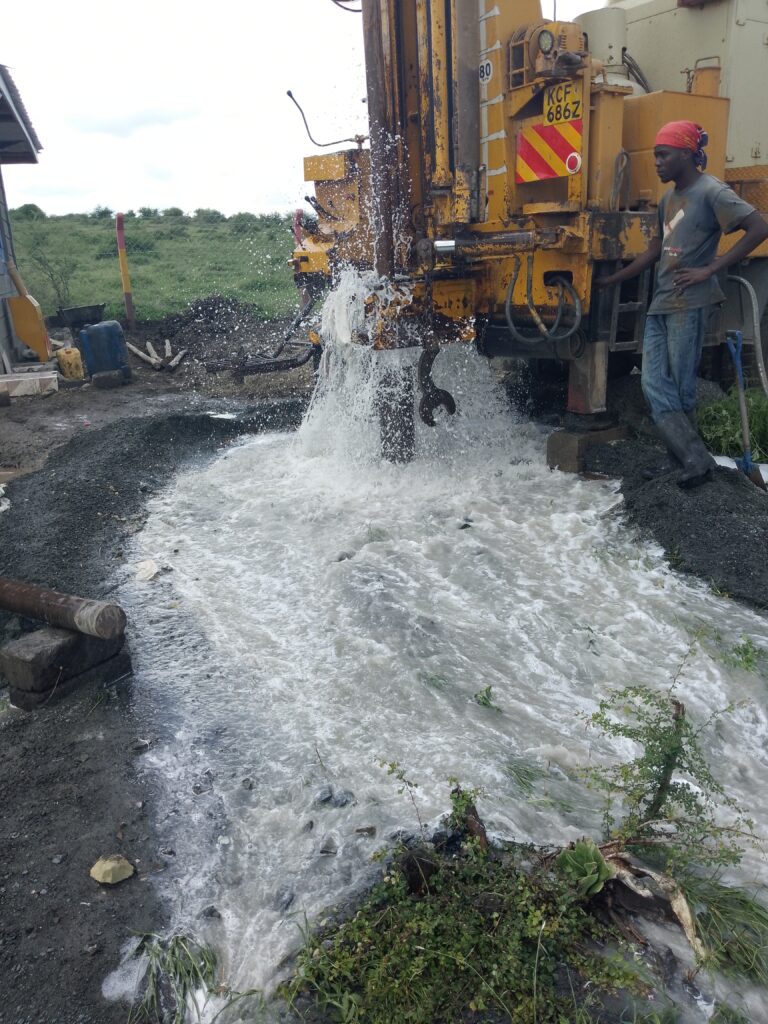
- A test pumping report showing the yield, drawdown and recovery, which indicates the safe, sustainable abstraction rate.
- A water quality analysis, particularly for domestic, commercial or food-related uses.
- Environmental approval (NEMA licence or exemption) where applicable.
These documents support your request for a specific abstraction volume.
Step-by-Step: Applying for the Abstraction Permit
Step 1: Establish your water demand. Calculate how many cubic metres per day or per year you need. For irrigation, this depends on crop, area and season. For livestock and domestic use, it depends on numbers and per capita consumption. A realistic, justified figure helps your application.
Step 2: Confirm the sustainable yield. Use test pumping data to confirm that the borehole can supply the demand. If demand exceeds safe yield, plan for storage, additional sources or demand management rather than over-pumping.
Step 3: Gather documents. Typical requirements include the completed application form, proof of land ownership or right to use, identification and tax documents, the drilling authorisation, the completion and test pumping reports, water quality results, a map or coordinates of the borehole, and environmental approvals where required. Obtain the current checklist from WRA.
Step 4: Submit the application. Apply through the appropriate WRA regional or sub-regional office or any online platform WRA provides, and pay the application fee.
Step 5: Technical review and inspection. WRA reviews the technical documents and may inspect the site to verify the borehole, the meter installation and its location relative to other sources.
Step 6: Permit decision and conditions. If approved, WRA issues the permit with conditions such as the maximum abstraction volume, permitted use, meter installation, reporting requirements and duration.
Step 7: Install a water meter. A functioning meter is typically mandatory. It must be correctly sized, installed on the discharge line, and protected from tampering. Keep a log of readings.
Step 8: Comply and renew. Follow the permit conditions, submit required returns and renew before expiry.
Fees and Costs
Fees depend on the use category and volume, and they have been the subject of reform proposals. Published guides give indicative ranges:
- Application and registration fees from roughly KSh 1,000 to KSh 5,000 in some cases, and higher for larger projects.
- Annual abstraction or permit fees commonly cited between about KSh 3,000 and KSh 25,000 depending on use and volume.
- Total permit and licensing cost for a Nairobi project, including NEMA and county processes, often estimated at KSh 87,000 to KSh 200,000.
- Costs of a water meter and its installation, usually in the tens of thousands of shillings depending on size and type.
- Consultant fees if you hire a professional to prepare and submit documents.
The Water Amendment Bill 2024 proposed removing certain fees. Because laws and schedules change, verify current fees with WRA before budgeting.
How Much Water Will You Be Allowed to Abstract?
WRA considers several factors:
- Sustainable yield of the borehole from test pumping.
- Aquifer capacity and recharge in the area and the level of existing abstraction.
- Impact on neighbouring boreholes, springs and rivers.
- Your justified demand. A request that is realistic and backed by calculations is more likely to be approved than an inflated one.
- Water allocation priorities and any catchment-level allocation plans.
In water-stressed catchments, WRA may restrict abstraction, particularly during droughts, or may impose additional conditions.
Understanding Test Pumping: The Technical Basis of Your Allocation
Test pumping is the scientific evidence that supports your permit. A typical test includes:
- Step-drawdown test: pumping at increasing rates in steps to understand how the borehole performs at different flows.
- Constant-rate test: pumping at a constant rate for a set period (often 24 hours or more) while measuring water level drawdown.
- Recovery test: monitoring how quickly the water level rises after pumping stops.
The data allows the hydrogeologist to estimate transmissivity (how easily the aquifer transmits water) and a safe pumping rate. Our article on yield testing and pumping tests explains this in detail. The safe yield is typically less than the maximum rate the borehole can deliver for a short time, because long-term pumping must not dewater the aquifer or damage the pump.
Metering, Monitoring and Reporting
Compliance does not end with permit issue:
- Read the meter regularly (for example weekly or monthly) and keep a log.
- Report abstraction volumes to WRA as required.
- Monitor water levels where conditions require, or if you notice declining levels. A simple dip meter or a data logger can be used.
- Maintain the borehole and meter. A broken meter can put you in breach.
- Retain records for inspection.
Good records are also scientifically valuable because long-term water level and abstraction data help detect over-pumping early.
Renewals, Transfers and Changes
Permits have defined validity and must be renewed before expiry. If you sell the property, change the use, increase abstraction, or add a second borehole, you may need to vary, transfer or apply for a new permit. Do not assume the existing permit covers new conditions. Late renewals can attract penalties or require fresh assessments.
Common Mistakes
- Pumping before getting the permit, believing it is a formality.
- Applying for a volume far larger than the borehole can support, which can lead to refusals or conditions that undermine your plans.
- Not installing or maintaining a meter.
- Missing renewal deadlines.
- Ignoring permit conditions on use, volume or reporting.
- Not updating the permit after changes in ownership or use.
- Treating the water quality report as optional. For drinking, food processing and commercial supply, water quality compliance is critical.
Frequently Asked Questions
Is the abstraction permit different from the borehole drilling permit? Yes. The drilling authorisation lets you build the borehole. The abstraction permit lets you pump and use the water.
Can I get the abstraction permit before drilling? The permit generally follows drilling and testing, since it relies on the actual borehole data. Your drilling authorisation comes first.
What if my borehole was drilled years ago without a permit? Contact WRA about regularising it. Procedures may include submitting technical data, test pumping and fees. Delaying can increase risk.
How long does approval take? It depends on completeness of documents and WRA workload. Overall approvals for a borehole project in Nairobi commonly take several months, so plan ahead.
Do I need to pay annually? Many permits carry annual or periodic fees depending on category and volume. Confirm your schedule with WRA.
Conclusion
A groundwater abstraction permit is the final legal step that turns a drilled borehole into a lawful water source. To obtain it, you need a documented, tested borehole, a justified water demand, a meter and a complete application to the Water Resources Authority. Keep your records, follow the permit conditions and renew on time, and you protect both your investment and the aquifer.
For test pumping interpretation, hydrogeological reports and help preparing your application, contact Reg. Geol. Mbugua Githae (MGSK) through consult.innercoregeoconsultants.co.ke.