Skip to content

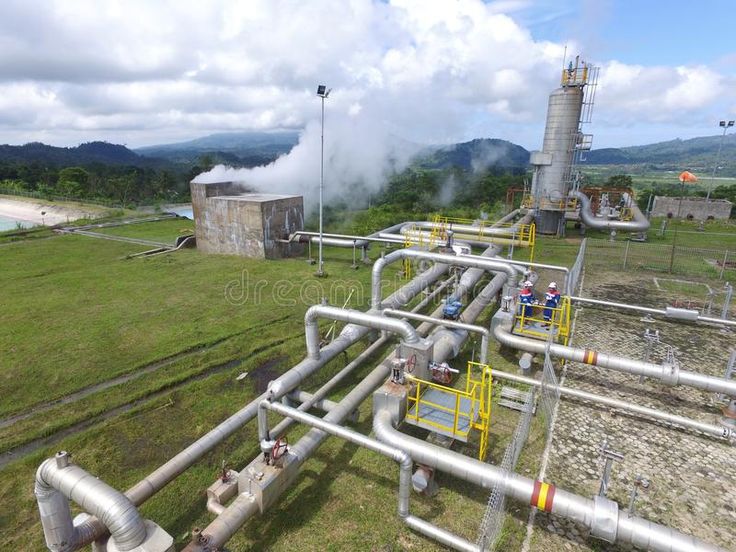
When people think of geothermal energy in Kenya, they picture steam turbines at Olkaria or Menengai. Yet electricity captures only part of the value of a hot reservoir. Geothermal heat can be used directly, without being converted to power, to warm greenhouses, dry crops, heat water for spas and run industrial processes. These “direct-use” applications are efficient, relatively simple and well suited to rural economies. This article explains how they work, what the geology must provide and where Kenya already benefits.
What Is Geothermal Direct Use?
Direct use means taking hot water or steam from the ground, or from the outflow of a power plant, and using the heat as heat. The temperatures needed are far lower than those for electricity. A power plant typically needs fluid above about 150 degrees Celsius, but many direct-use applications work between 30 and 150 degrees.
Because the heat is not converted to electricity, much less energy is lost. Direct-use systems typically use 50 to 70 percent of the heat they extract, compared with roughly 10 to 20 percent efficiency in electricity generation. Cascading, in which the same fluid passes through several uses from hottest to coolest, raises the overall efficiency further.
The Lindal Diagram: Matching Temperature to Use
Geothermal engineers use the Lindal diagram, named after Icelandic engineer Baldur Lindal, to match temperature with application. In broad terms:
- Above 150 degrees Celsius: electricity generation and some industrial processes.
- 100 to 150 degrees: evaporation, drying of timber and agricultural products, and some refrigeration systems.
- 60 to 100 degrees: space heating, greenhouse heating, food drying and cooling by absorption.
- 30 to 60 degrees: bathing, swimming pools, soil warming and aquaculture.
The diagram helps planners design a cascade. For example, brine leaving a power plant at about 120 degrees may first dry crops, then heat greenhouses and finally warm fishponds before being reinjected.
The Geology Behind Direct-Use Heat
Kenya’s direct-use potential is a product of the Rift Valley itself. As the East African Rift stretches the crust, magma rises close to the surface and heats groundwater circulating through fractures. The key geological elements are:
- A heat source: cooling magma bodies beneath volcanic centres such as Olkaria, Menengai, Longonot, Suswa, Eburru, Paka, Silali and Barrier.
- Permeable rock: faulted and fractured volcanic rocks and pyroclastics that let water circulate.
- A fluid supply: rainfall and lake water recharging the system through rift-margin faults.
- A cap: low-permeability layers, often clay-altered rocks, that trap the heat.
Surface manifestations such as fumaroles, hot springs, mud pools and altered ground point to where heat is near the surface. Low-temperature systems also occur outside the volcanic centres, for example along deep faults in the Rift where groundwater circulates and warms naturally, such as hot springs at Lake Bogoria and Lake Magadi.
Because a direct-use system needs a lower temperature than a power plant, many more locations in Kenya may qualify than those suitable for electricity. Mapping those sites requires geological mapping, geochemical sampling (including silica and cation geothermometers), geophysical surveys such as resistivity and gravity, and thermal-gradient drilling.
Greenhouses
Greenhouse heating is the best-known direct-use application in Kenya. The Naivasha area is Kenya’s flower-growing hub, and the nearby Olkaria field offers heat and carbon dioxide in a single resource. Oserian Development Company’s flower farm has used geothermal energy for greenhouse heating and to enrich greenhouse air with CO2 from geothermal gas, which boosts plant growth.
Geothermal heat helps horticulture in several ways:
- Stabilises night-time temperatures in highland and cool locations.
- Reduces fuel costs, particularly where diesel or fuelwood would otherwise be used.
- Supports year-round production and higher-value crops such as cut flowers, vegetables and seedlings.
- Provides CO2 enrichment when treated geothermal gas is available, though gas must be cleaned of hydrogen sulphide, which damages plants.
A shallow well or heat exchanger coupled to a closed loop prevents corrosive geothermal fluids from entering the greenhouse. Fluid chemistry therefore matters: scaling (mineral deposits such as silica or calcite) and corrosion can clog pipes and equipment, so water analysis is essential.
Drying of Crops and Products
Drying is a major source of post-harvest loss in Africa. Sun drying is slow, depends on weather and exposes produce to dust and contamination. Geothermal dryers use warm air at controlled temperatures, giving faster, cleaner and more consistent results.
Applications include:
- Cereals, pulses and coffee or tea processing.
- Fruits, vegetables and spices.
- Pyrethrum, a Kenyan crop used for natural insecticides, where drying needs steady moderate heat.
- Fish and meat products.
- Timber, which needs controlled drying to reduce cracking.
Geothermal developers in Kenya, including KenGen and the Geothermal Development Company (GDC), have promoted pilot projects and “direct-use parks” next to steamfields so that farmers and small enterprises can lease space and heat. Designs typically use heat exchangers: hot water passes through a coil, a fan blows air across it and the warmed air passes over the product.
Success depends on dependable supply, affordable access, nearby markets and training. A technically sound dryer can still fail if farmers cannot transport their produce to the site.
Spas and Bathing
Geothermal bathing is one of the oldest direct uses in the world. Warm mineral water supports tourism, wellness and local employment. Kenya already has a number of geothermal spa experiences, including the Olkaria geothermal spa near Hell’s Gate National Park, which uses the outflow of power plant water that has already generated electricity.
Spas typically operate at 35 to 42 degrees Celsius. Fluid is often mixed with cooler water or passed through heat exchangers. Key considerations include:
- Water chemistry: some geothermal waters are rich in silica, sodium bicarbonate, fluoride or boron. Concentrations must be safe for human use, and fluoride in particular is high in many Rift Valley waters.
- Health and safety: regulation of temperature, microbial quality and gas exposure (hydrogen sulphide and CO2).
- Environmental protection: disposing of used water without damaging soils, lakes or aquifers.
- Cultural and community interests: some springs have traditional or spiritual meaning, so consultation matters.
Other Direct-Use Possibilities
Beyond greenhouses, drying and spas, geothermal heat can also support:
- Aquaculture: warm ponds accelerate fish growth, for example tilapia.
- Milk pasteurisation and food processing.
- Cold storage: absorption chillers can use geothermal heat to make cooling.
- Mineral recovery: silica and other materials can sometimes be extracted from brine.
- Space heating: more relevant in cooler highlands and for institutional buildings.
- Industrial parks: clusters that share heat, such as the proposed geothermal industrial park concepts around Olkaria and Menengai.
Economics and Risk
Direct-use projects usually cost less than power plants and can be built in stages. The main costs are drilling or access to hot fluid, pipelines, heat exchangers and the application equipment. Because hot water cannot be piped far without losing heat, users must locate close to the source, ideally within a few kilometres.
The main risks are resource uncertainty, scaling and corrosion, reinjection management, and mismatch between the heat source and the market. Early geoscience work addresses the first, through temperature and flow tests, and the second, through fluid sampling and chemical modelling.
Planning a Geothermal Direct-Use Project in Kenya
- Resource screening: use geological maps, existing data and surface manifestations to identify warm zones.
- Field survey: geochemistry, geophysics and temperature-gradient wells.
- Application matching: use the Lindal diagram to pair available temperature with a viable local business.
- Environmental and legal steps: an Environmental Impact Assessment, water use permits and, where relevant, licences under the Energy Act and Water Act.
- Community engagement: agreements with landowners, farmers and county governments.
- Monitoring: track temperature, flow and chemistry so the resource is not over-drawn.
Key Takeaways
- Direct use takes advantage of lower-temperature heat that cannot generate electricity efficiently.
- Kenya’s Rift Valley offers many sites, and existing power plants provide waste heat.
- Greenhouses, crop drying and spas are the most developed applications, with aquaculture and cold storage close behind.
- Good geology, careful fluid chemistry and viable markets decide success.
References and Further Reading
- Lund, J.W., Toth, A.N. (2021). Direct utilization of geothermal energy 2020 worldwide review. Geothermics, 90.
- Lindal, B. (1973). Industrial and other applications of geothermal energy. UNESCO.
- Kenya Electricity Generating Company (KenGen) and Geothermal Development Company (GDC) publications on direct-use.
- UNU Geothermal Training Programme (GRÓ-GTP) technical reports on direct use.
- Mariita, N.O. (2002). The impact of large-scale renewable energy development on the poor: environmental and socio-economic impact of a geothermal power plant on a poor rural community in Kenya. Energy Policy.