Skip to content
Boreholes are, for millions of people across East Africa, the difference between reliable clean water and a long walk to an unpredictable source. Whether it’s a community water committee planning a new borehole for a village, or a commercial developer sourcing water for an industrial project, understanding how boreholes are properly sited, constructed, and maintained makes the difference between a productive, long-lasting water source and a costly, disappointing failure.

Why Proper Siting Matters More Than Almost Anything Else
The single biggest determinant of borehole success or failure is where it’s drilled. Groundwater is not uniformly distributed underground; it’s concentrated in specific geological formations and, particularly in basement rock terrain common across much of East Africa, often confined to discrete fracture zones that can be missed entirely by a borehole drilled just a few meters away from a productive location.
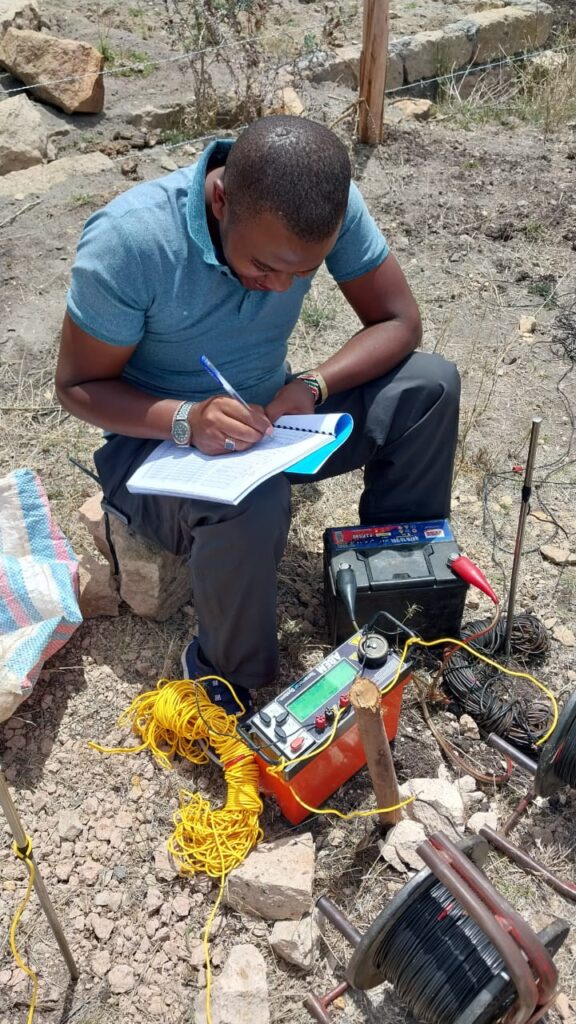
This is why professional hydrogeological siting, typically involving geological assessment combined with geophysical surveying methods like electrical resistivity, is so strongly recommended before committing to drilling, even for relatively small community water projects. The modest additional cost of proper siting investigation is almost always far smaller than the cost of drilling a dry or low-yielding borehole, a disappointingly common outcome when drilling proceeds based on guesswork, traditional knowledge alone, or simply drilling wherever access is most convenient.
The Siting Process
Professional borehole siting typically begins with a review of existing geological information and any available data from nearby boreholes, providing initial context about likely groundwater conditions in the area. Field investigation then follows, often combining geological mapping of surface features like rock outcrops and vegetation patterns that can indicate underlying geological conditions, with geophysical surveying to identify promising subsurface targets.
Electrical resistivity surveys are particularly valuable in this context, since they can detect the presence of saturated, more conductive zones underground, as well as help identify fracture zones in basement rock that are likely to yield sufficient water for a productive borehole. In sedimentary or volcanic terrain, resistivity surveys similarly help identify permeable water-bearing layers versus less productive surrounding material.
Borehole Construction: What Actually Happens Underground
Once a suitable drilling location has been identified, construction proceeds through several distinct stages, each important to the borehole’s eventual performance and longevity.
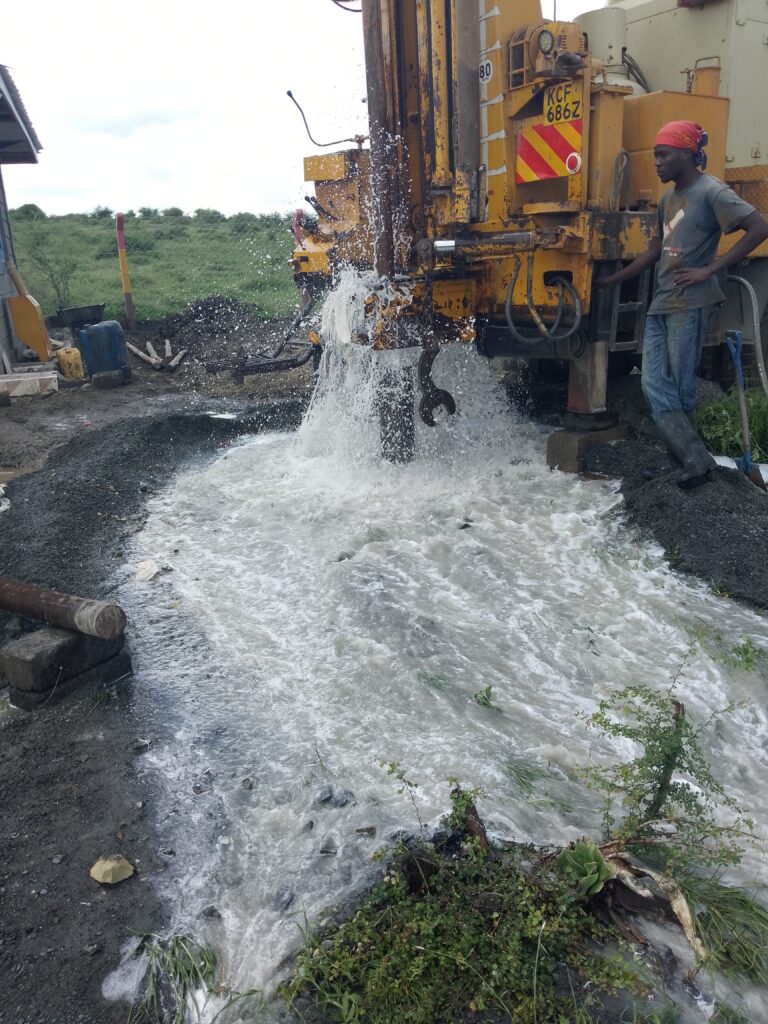
Drilling creates the initial hole, using methods appropriate to the local geology, ranging from rotary drilling in harder rock formations to simpler percussion methods sometimes used in softer, unconsolidated materials. Drilling depth is determined based on the target aquifer identified during siting investigation, though actual depth often needs adjustment based on conditions actually encountered during drilling.
Casing is then installed to line the borehole, preventing collapse of the hole walls and sealing off unwanted water-bearing zones, such as shallow, potentially contaminated groundwater, from the deeper, cleaner aquifer being targeted. Casing material varies from steel to PVC depending on depth, groundwater chemistry, and local cost considerations.
Screening allows water to enter the borehole from the target aquifer while filtering out sand and sediment that would otherwise clog the well or cause excessive wear on pumping equipment. Screens are precisely positioned opposite the productive water-bearing zone identified during drilling, with slot sizes selected based on the grain size of surrounding aquifer material.
Gravel packing, placed around the screen in the annular space between the screen and borehole wall, further improves the filtering of fine sediment while enhancing the effective permeability immediately around the well, improving overall yield.
Development is the crucial final construction step, where the completed borehole is vigorously pumped, surged, or otherwise agitated to remove fine sediment introduced during drilling and to maximize the natural permeability of the surrounding aquifer material immediately around the screen. Inadequately developed boreholes frequently underperform relative to their true potential, producing lower yields and more turbid water than a properly developed well would achieve from the same aquifer conditions.
Testing and Confirming Borehole Yield
Once construction and development are complete, pumping tests are essential for confirming the borehole’s sustainable yield and understanding how water levels respond to extended pumping. A properly conducted pumping test involves pumping the borehole at a controlled rate over an extended period, often 24 hours or more for significant water supply projects, while carefully monitoring water level drawdown.
This data allows hydrogeologists to calculate a sustainable pumping rate that the borehole can support over the long term without excessive water level decline, information that’s essential for appropriately sizing pump equipment and setting realistic expectations for how much water the completed borehole can reliably provide.
Water Quality Testing
Yield alone doesn’t determine whether a borehole is suitable for its intended use. Water quality testing, covering parameters like bacterial contamination, salinity, fluoride, and other naturally occurring or human-introduced contaminants, is essential before a borehole is put into service, particularly for domestic water supply. Certain geological settings across East Africa are associated with naturally elevated fluoride or salinity levels that can render groundwater unsuitable for drinking without treatment, even where yield and physical water quality otherwise appear satisfactory.
Common Reasons Boreholes Fail or Underperform
Understanding common failure modes helps both communities and developers avoid repeating costly mistakes. Poor siting, drilling without adequate geological or geophysical investigation, remains the single most common cause of low-yielding or entirely dry boreholes. Inadequate development, where insufficient time or effort is spent developing the completed borehole, frequently results in yields well below the aquifer’s true potential.
Poor construction quality, including inadequate casing or screen installation, can lead to borehole collapse, sand infiltration, or contamination from shallow groundwater bypassing intended seals. Over time, many boreholes also experience declining yield due to biofouling or mineral encrustation of the screen, a gradual process that can often be addressed through periodic borehole rehabilitation and cleaning, though prevention through appropriate initial construction and water chemistry consideration is generally far more cost-effective than remediation after the fact.
Community Water Supply Considerations
For community-scale borehole projects, technical success is only part of the equation. Sustainable community water supply also depends on appropriate governance arrangements for ongoing operation and maintenance, adequate funding mechanisms for eventual pump repairs or borehole rehabilitation, and realistic community expectations about the borehole’s likely yield and appropriate uses.
Many well-intentioned community borehole projects across the region have struggled not because of technical drilling failures, but because of inadequate planning for the long-term institutional and financial arrangements needed to keep a borehole functioning reliably for years after the drilling rig has left the site.
Getting It Right From the Start
Whether for a single community water point or a larger commercial groundwater development project, the fundamentals of borehole success remain consistent: invest in proper hydrogeological siting before drilling begins, ensure construction follows sound technical practices appropriate to local geological conditions, conduct thorough development and testing before the borehole is put into service, and plan realistically for long-term operation and maintenance from the outset. This combination of technical rigor and practical planning is what ultimately determines whether a borehole becomes a reliable, decades-long water source or a costly, disappointing addition to the many failed boreholes that dot the landscape across parts of the region.