Few environmental challenges in mining carry as much long-term consequence as acid mine drainage. Unlike many mining impacts that end once operations cease, acid mine drainage, often abbreviated as AMD, can continue for decades or even centuries after a mine closes, quietly degrading water quality and ecosystems long after the mining company itself has moved on. Understanding what causes it, how it’s assessed, and what can genuinely be done to prevent it has become essential knowledge for anyone involved in mining development, regulation, or environmental management.
What Acid Mine Drainage Actually Is
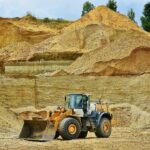
Acid mine drainage is the acidic, metal-laden water that forms when sulfide minerals, commonly pyrite (iron sulfide), are exposed to air and water through mining activities. Under natural, undisturbed conditions, these sulfide minerals remain buried and largely unreactive. But mining activities, whether through open pit excavation, underground workings, or waste rock and tailings disposal, expose large volumes of sulfide-bearing rock to atmospheric oxygen and water for the first time in geological history.
The Chemistry Behind AMD Formation
When sulfide minerals like pyrite come into contact with oxygen and water, a series of chemical reactions begins that ultimately produces sulfuric acid. This reaction can proceed relatively slowly on its own, but it’s often significantly accelerated by naturally occurring bacteria that thrive in these acidic, sulfide-rich environments and catalyze the oxidation process. As the reaction progresses, the resulting acidic water becomes capable of dissolving additional metals from surrounding rock, including iron, aluminum, copper, zinc, and in some cases more toxic elements like arsenic or cadmium, depending on the specific mineralogy of the deposit.
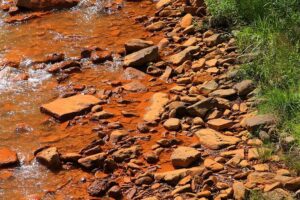
The result is drainage water that can be extremely acidic, sometimes with pH levels below 3, carrying elevated concentrations of dissolved metals that are toxic to aquatic life even at relatively low concentrations. When this water enters streams, rivers, or groundwater systems, it can cause severe and long-lasting ecological damage, often visible as orange or reddish staining on streambeds from precipitated iron oxides, a telltale sign of AMD-affected waterways found near mining operations around the world.
Why AMD Risk Varies So Significantly Between Sites
Not every mining operation faces significant AMD risk. The potential for acid generation depends heavily on the specific mineralogy of the ore body and surrounding waste rock. Deposits with high sulfide mineral content, particularly pyrite, carry substantially higher AMD risk than those with predominantly oxide or carbonate mineralization.
Equally important is the presence of neutralizing minerals, particularly carbonates like calcite, within the same rock mass. Where sufficient neutralizing capacity exists alongside sulfide minerals, the acid-generating reactions can be substantially buffered, sometimes preventing significant AMD formation even in rock with meaningful sulfide content. This is why comprehensive geochemical characterization, assessing both the acid-generating and acid-neutralizing potential of ore and waste rock, forms such a critical part of responsible mine planning from the earliest exploration stages onward.
Predicting AMD Potential Before Mining Begins
Given the severe and long-lasting consequences of AMD, responsible mining companies now conduct detailed geochemical characterization studies well before major mining decisions are finalized. Static testing methods, including acid-base accounting, measure the balance between acid-generating and acid-neutralizing minerals within representative rock samples, providing an initial screening of AMD potential across different rock types that will be encountered during mining.
Kinetic testing methods go a step further, subjecting rock samples to accelerated weathering conditions over extended periods, sometimes many months or years, to observe how acid generation and metal leaching actually develop over time under conditions that more closely approximate real-world weathering processes. This kind of testing is particularly valuable for understanding the timing of AMD onset, since acid generation from certain rock types can take years to become apparent, a critical consideration for mine planning and closure design.
Prevention and Management Strategies
The most effective AMD management strategy is prevention, minimizing the exposure of sulfide-bearing rock to oxygen and water in the first place, wherever this is practically achievable. Several established approaches help achieve this.
Selective handling and segregation of waste rock based on its acid-generating potential, identified through geochemical characterization, allows mining operations to isolate high-risk material and manage it separately from more benign waste rock, often through encapsulation within engineered waste rock facilities designed to limit water and oxygen infiltration.
Water covers and underwater disposal, where feasible, can be highly effective at limiting oxygen exposure to sulfide-bearing tailings and waste rock, since oxygen diffuses far more slowly through water than through air. This approach has been successfully used at various mine sites globally, though it requires careful engineering to ensure long-term stability of the water cover.
Dry covers and engineered capping systems use layers of low-permeability material, sometimes combined with vegetation, to limit both water infiltration and oxygen diffusion into underlying sulfide-bearing waste, reducing the rate of acid generation even where complete prevention isn’t achievable.
Blending with neutralizing material, where locally available limestone or other carbonate-rich rock can be blended with acid-generating waste, provides a chemical buffering approach that can help control drainage water pH even where physical isolation strategies aren’t fully effective on their own.
Treatment of Existing AMD
Where AMD generation cannot be fully prevented, whether at active mines or legacy sites with pre-existing contamination, treatment becomes necessary to protect downstream water quality. Active treatment systems, which typically involve adding lime or other alkaline materials to neutralize acidity and precipitate dissolved metals, are effective but require ongoing chemical inputs, energy, and management, representing a substantial long-term operational and financial commitment, particularly concerning for legacy sites where no operating company remains responsible for ongoing costs.
Passive treatment systems, including constructed wetlands and bioreactors that use natural biological and chemical processes to neutralize acidity and remove metals, offer a lower-maintenance alternative particularly suited to smaller flows or long-term post-closure treatment needs, though they generally require larger land areas and can be less effective for very high-flow or high-concentration AMD sources.
Regulatory and Financial Assurance Considerations
Given the potential for AMD to persist for generations after mine closure, regulators in most jurisdictions now require detailed AMD risk assessment as part of environmental permitting, along with financial assurance mechanisms designed to ensure adequate funding remains available for long-term water treatment and monitoring, even if the operating company ceases to exist. These financial assurance requirements have become increasingly stringent globally, reflecting hard lessons learned from historic mine sites where inadequate closure planning left governments and communities responsible for AMD remediation costs that mining companies never adequately provided for.
Getting AMD Management Right From the Start
The single most important lesson from decades of AMD management experience worldwide is that prevention and early characterization are dramatically more cost-effective than remediation after the fact. Mining projects that invest in thorough geochemical characterization during exploration and feasibility stages, and that incorporate AMD prevention strategies into fundamental mine and waste facility design from the outset, avoid the enormous long-term liabilities that have burdened so many historic mining operations around the world.
For mining companies and regulators across mineral-rich regions like East Africa, where mining activity continues to expand, embedding rigorous AMD risk assessment into standard project development practice isn’t just good environmental stewardship. It’s sound long-term financial planning that protects both the environment and the mining industry’s own social license to operate for decades to come.