Skip to content

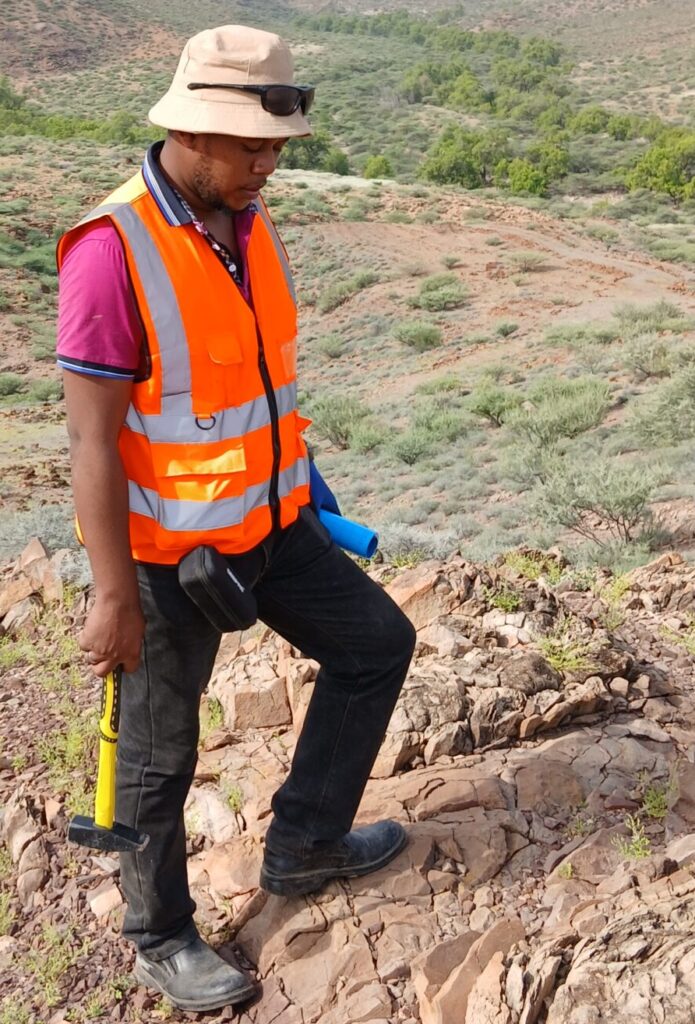
Gold deposits in Western Kenya sit in some of the oldest rocks in the country, part of the same ancient crust that hosts world-class mines across the border in Tanzania. The Migori, Kakamega and Vihiga areas have been mined, prospected and fought over for nearly a century, and they remain the centre of Kenya’s gold story. This article explains the geology of these three districts in plain language, what has been found, and what challenges lie ahead for investors, geologists and communities.
The Big Picture: The Nyanza Craton
A craton is a very old, stable piece of continental crust. Western Kenya lies on the Nyanza Craton, the Kenyan part of the larger Archaean Tanzania Craton. “Archaean” refers to rocks more than 2.5 billion years old, and the Nyanzian rocks here are reported to be over about 3.1 billion years old.
Two main rock groups matter for gold:
- The Nyanzian Supergroup: a greenstone succession of volcanic rocks (both mafic, meaning iron- and magnesium-rich, and felsic, meaning silica-rich), with banded iron formation (BIF), a layered rock of iron-rich and silica-rich bands.
- The Kavirondian Supergroup: younger clastic sediments, such as grits, sandstones, greywackes and conglomerates, which unconformably overlie the Nyanzian rocks, meaning they were laid down on an eroded surface.
Both were tightly folded about roughly east-west axes and later intruded by granitoids (granite-like rocks). This deformation created the faults, shear zones and fold hinges that act as plumbing for gold-bearing fluids.
How Gold Formed: Orogenic Systems in Plain Words
Most of the gold here is thought to be orogenic. During mountain-building, hot, mineral-rich fluids moved up faults and shear zones, then cooled and deposited gold with quartz in veins. Gold tends to concentrate where structures bend, intersect or cross chemically reactive rock such as iron-rich units. That is why geologists in Western Kenya spend so much time mapping folds, veins and faults.
Migori Greenstone Belt
The Migori Greenstone Belt in the south-west, near the Tanzanian border, is the most prospective part of the Kenyan Nyanzian terrain. Published summaries describe roughly 245 square kilometres of prospective greenstone along a strike length of about 63 km. Gold occurs in quartz veins in an orogenic setting.
Migori also hosts a different deposit type: Macalder, a volcanogenic massive sulphide (VMS) copper-gold deposit, which formed from metal-rich fluids venting on an ancient seafloor. Macalder was discovered in the mid-1930s and mined until the mid-1970s.
Modern companies have returned to the belt. Red Rock Resources reports a JORC resource of about 723,000 ounces of gold, held through Mid Migori Mining. Linear Gold, and its partner East African Pure Gold, have reported soil anomalies of up to 236 parts per billion gold in the Migori sector. A published structural study by Odek (2023) concludes that folding and dyke-like structures control the mineralisation, which fits the orogenic model.
Context matters here. Barrick’s North Mara mine lies about 30 km to the south-east in Tanzania, in the same greenstone belt system. That proximity encourages exploration in Migori, but it does not guarantee similar results on the Kenyan side.
Kakamega and the Kapsabet Area
Further north, the Kakamega-Kapsabet area lies at a tectonic contact. This is where the Nyanza Cratonic Segment meets the much younger Neoproterozoic Mozambique Belt, a major band of metamorphic rocks that runs along East Africa. The rocks are metamorphosed to greenschist facies, a low-to-moderate grade of metamorphism.
Here a good deal of gold is hosted in Kavirondian turbidites, which are sedimentary rocks deposited by underwater avalanches of sand and mud. Gold is associated with smoky quartz veins, and sulphide minerals appear close to granitoid plutons. An iron-oxide chert marker bed, a thin, distinctive layer, caps the Nyanzian succession and helps geologists place rocks in sequence.
Gold in the Kakamega district was reported historically in the early twentieth century, and historical accounts describe a gold rush there in the 1930s, though the precise dates are worth checking in primary sources. Artisanal mining continues today.
Vihiga and the Lirhanda Corridor
The Vihiga area is best known for the Lirhanda Corridor, a trend of gold prospects that runs across Kakamega and Vihiga counties, including Isulu, Bushiangala, Lirhembe and Ikolomani. Together they form the West Kenya project.
Shanta Gold, which is listed on London’s AIM, acquired Barrick’s West Kenya assets in 2020. The company has reported a mineral resource of about 1.3 million ounces at a grade of 11.43 grams per tonne of gold. An earlier estimate by Acacia Mining, the former Barrick affiliate, was about 1.31 million ounces. A grade above 10 g/t is high by global standards, which is why the project is considered attractive, though high-grade veins can also be erratic and difficult to model.
Media reports describe an underground development with a mine life of about eight years and capital cost of around KES 27 billion. An environmental impact assessment was reported as submitted to NEMA in November 2025. All figures are subject to final studies, approvals and financing, so readers should confirm them against the company’s latest announcements.
Artisanal Mining: Livelihoods and Risks
Western Kenya has a long tradition of artisanal and small-scale gold mining. Reports indicate that thousands of families rely on it, with some 172 mining groups in Kakamega County alone. Many operate with hand tools, pits and narrow tunnels.
The challenges are serious. Tunnel collapses have caused deaths, and disputes over access and ownership have sometimes turned violent. Processing methods that use mercury are a health and environmental concern. At the same time, artisanal workings are also valuable geological clues, because they often reveal where the veins are.
The national government has tried to support the sector. A government gold refinery at Ikolomani has been reported to have received KES 5.8 billion, intended to give small miners a place to process and sell gold legally. In nearby Vihiga, a granite processing plant is also part of efforts to add value locally.
Where Western Kenya Fits in the National Picture
Kenya’s gold output has been modest. About 410 kg was recorded in 2023, and mining as a whole contributes under one per cent of GDP, against a government ambition of 10 per cent by 2030. Gold attracts a 3 per cent royalty. Kilimapesa, in Lolgorian in Narok County, is described as Kenya’s first gold mining licence under the current regime, which shows how few large gold mines exist.
Western Kenya’s gold, especially if the West Kenya project is built, could change this picture. A single high-grade underground mine would add a large, formal producer to a sector now dominated by small operators.
What Exploration Is Still Needed
Several questions remain open for geologists:
- Depth continuity: do high-grade veins continue at depth, and how consistent are they?
- Regional coverage: much of the craton is under soil and laterite, and has had limited modern geophysics and drilling.
- Structural models: better 3D models of folds and shear zones could reveal new targets along strike.
- Mozambique Belt contact: the zone where craton meets younger belt is geologically complex and under-explored.
- Metallurgy: high-grade sulphide-bearing ore needs careful testing for gold recovery.
Modern airborne magnetic and radiometric data, together with soil sampling and drilling, are well suited to these tasks.
Practical Considerations for Investors and Juniors
Western Kenya offers real geology, but small-scale miners already occupy much of the best ground. Early, honest community engagement is therefore not just a courtesy, it is a business necessity. Investors should also examine licence status, work programme commitments, resource classification (inferred versus indicated), and the realistic timeline for permitting. Headline ounces are not the same as economic mine reserves.
Conclusion
The geology of Migori, Kakamega and Vihiga is a story of ancient greenstones, folded sediments and gold-bearing quartz veins, now partly mapped, partly mined and still largely unexplored in detail. Migori continues the productive Tanzanian greenstone terrain, Kakamega marks the contact with the Mozambique Belt, and the Vihiga-Kakamega corridor hosts one of Kenya’s most advanced high-grade projects. Whether this potential becomes jobs and revenue will depend on sound science, responsible artisanal engagement, and transparent regulation.
Facts, resource figures, licences and tenders change over time, so confirm details with official sources. This article is general information, not investment or legal advice.
Sources and Further Reading
- British Geological Survey and NGDC Kenya: Geology of Kenya
- Red Rock Resources: Migori Gold Project
- Odek (2023): structural study of the Migori area (Tharaka University repository)
- Geology of the Kakamega-Kapsabet area (South Eastern Kenya University repository)
- AllAfrica: Shanta Gold West Kenya project coverage, November 2025