Skip to content
Urbanization and land development significantly alter the natural hydrological cycle. In natural landscapes such as forests, grasslands, and wetlands, rainfall infiltrates the soil, evaporates back into the atmosphere, or is gradually released into streams and rivers. However, when land is developed for residential, commercial, or industrial purposes, natural surfaces are replaced by impervious materials such as asphalt, concrete, and rooftops. These surfaces reduce infiltration and increase the volume and velocity of surface runoff.
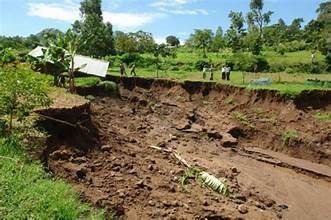
Post-development surface runoff refers to the excess water that flows over land surfaces after rainfall or irrigation due to reduced infiltration capacity caused by development activities. If not properly managed, this runoff can lead to flooding, soil erosion, sedimentation of water bodies, infrastructure damage, and degradation of water quality.
Effective control of post-development surface runoff is therefore a fundamental component of sustainable urban drainage systems (SUDS) and stormwater management planning. This article provides a scientific and professional discussion on the methods used to control surface runoff after land development, supported by conceptual diagrams and illustrations.
Hydrological Changes After Development
Before development, natural landscapes typically allow large amounts of rainfall to infiltrate into the soil.
Pre-Development Hydrology
(Conceptual illustration showing infiltration, evapotranspiration, and surface runoff differences between natural and developed landscapes.)
In a natural watershed:
-
Infiltration accounts for approximately 40–50% of rainfall.
-
Evapotranspiration returns about 30–40% to the atmosphere.
-
Surface runoff may only represent 10–20%.
After development:
-
Impervious surfaces drastically reduce infiltration.
-
Runoff increases to 40–70% of total rainfall.
-
Peak discharge in streams increases.
-
Flooding risk becomes higher.
This shift in hydrology is the primary reason that runoff control measures are necessary in developed areas.
Objectives of Post-Development Runoff Control
The primary objectives of runoff management after development include:
-
Reducing peak stormwater discharge
-
Promoting infiltration and groundwater recharge
-
Preventing soil erosion
-
Improving water quality
-
Protecting downstream infrastructure
-
Maintaining natural hydrological balance
Engineering solutions aim to ensure that post-development runoff rates are similar to pre-development conditions wherever possible.
Structural Measures for Runoff Control
Structural measures involve physical infrastructure designed to control or manage stormwater runoff.
Detention Basins
Detention basins temporarily store stormwater and release it slowly into drainage systems or natural waterways.
Detention Basin Concept
↓
——————–
| |
| Detention Basin |
| |
——————–
↓
Controlled Outlet
↓
Stream
Key Functions
-
Reduce peak discharge
-
Delay stormwater release
-
Prevent downstream flooding
Design Considerations
-
Basin storage capacity
-
Outlet structure size
-
Sediment accumulation
-
Safety and maintenance
Detention basins are widely used in urban stormwater systems and can also serve recreational purposes when designed as landscaped ponds.
Retention Ponds
Retention ponds differ from detention basins in that they permanently retain a certain volume of water.
Retention Pond Diagram
↓
———————
| |
| Retention Pond |
| Permanent Pool |
| |
———————
↓
Groundwater Recharge
Retention ponds help:
-
Improve water quality through sedimentation
-
Promote biological filtration
-
Enhance landscape aesthetics
They are often integrated into urban parks or residential developments.
Infiltration Trenches
Infiltration trenches are shallow excavations filled with gravel or crushed stone that allow runoff to infiltrate into the soil.
Infiltration Trench Diagram
↓
———————-
| Vegetation |
———————-
| Gravel / Stone |
| Infiltration Zone |
———————-
| Soil |
———————-
↓
Groundwater Recharge
Advantages
-
Encourages groundwater recharge
-
Reduces surface runoff
-
Improves water quality
Limitations
-
Not suitable in areas with clay soils
-
Requires maintenance to prevent clogging
Permeable Pavements
Permeable pavements are specially designed surfaces that allow water to infiltrate through the pavement structure.
Permeable Pavement Structure
↓
————————
| Permeable Concrete |
————————
| Gravel Storage Layer |
————————
| Filter Fabric |
————————
| Natural Soil |
————————
Common types include:
-
Permeable concrete
-
Porous asphalt
-
Interlocking permeable pavers
Benefits
-
Reduces runoff volume
-
Filters pollutants
-
Supports groundwater recharge
Permeable pavements are commonly used in parking lots, walkways, and low-traffic roads.
Green Roofs
Green roofs are vegetated roof systems designed to absorb rainfall and reduce stormwater runoff.
Green Roof System
———————-
Growing Medium
———————-
Drainage Layer
———————-
Waterproof Membrane
———————-
Roof Structure
Benefits
-
Absorbs rainfall
-
Reduces runoff
-
Improves urban air quality
-
Provides thermal insulation
Green roofs are increasingly used in sustainable urban architecture.
Vegetative and Nature-Based Solutions
Nature-based solutions replicate natural hydrological processes to control runoff.
Rain Gardens (Bioretention Systems)
Rain gardens are shallow vegetated depressions designed to collect and infiltrate stormwater.
Rain Garden Concept
↓
Downspout
↓
————————–
| Vegetated Rain Garden |
| Native Plants |
| Soil Filter Layer |
————————–
↓
Groundwater
Rain gardens:
-
Filter pollutants
-
Promote infiltration
-
Improve landscape aesthetics
They are particularly effective in residential stormwater management.
Vegetated Swales
Vegetated swales are shallow channels planted with grasses or vegetation that convey and filter stormwater runoff.
Vegetated Swale Diagram
↓
—————-
\ Vegetated /
\ Swale /
———-
↓
Stormwater Drain
Benefits
-
Reduce flow velocity
-
Filter sediments
-
Enhance infiltration
Swales are commonly used along roads, highways, and parking areas.
Riparian Buffer Zones
Riparian buffers are vegetated areas along rivers and streams that help control runoff before it reaches water bodies.
↓
———————–
| Vegetated Buffer |
| Trees & Grasses |
———————–
↓
River
Functions
-
Reduce sediment transport
-
Filter pollutants
-
Stabilize stream banks
These buffers are essential in maintaining river ecosystem health.
Non-Structural Runoff Control Measures
Non-structural strategies focus on planning, regulation, and land-use management.
Land Use Planning
Urban planning plays a crucial role in minimizing runoff impacts.
Key planning strategies include:
-
Limiting impervious surfaces
-
Preserving natural drainage patterns
-
Protecting wetlands
-
Maintaining open green spaces
Proper planning ensures that development occurs in a hydrologically sustainable manner.
Stormwater Regulations
Many countries enforce regulations that require developers to implement runoff control systems.
Typical regulatory requirements include:
-
Stormwater management plans
-
Runoff detention structures
-
Sediment control measures
-
Environmental impact assessments
These policies ensure that post-development runoff does not exceed pre-development levels.
Maintenance and Monitoring
Stormwater infrastructure must be regularly maintained.
Maintenance activities include:
-
Sediment removal
-
Vegetation management
-
Inspection of drainage systems
-
Repair of erosion damage
Without maintenance, runoff control structures can lose efficiency and fail during heavy storms.
Integrated Stormwater Management
Modern stormwater management uses a combination of structural and non-structural approaches.
Integrated Runoff Control System
↓
[Green Roof]
↓
[Permeable Pavement]
↓
[Vegetated Swale]
↓
[Detention Basin]
↓
Natural Watercourse
This multi-layered approach ensures that runoff is controlled at multiple points within the drainage system.
Importance for Developing Countries
In rapidly urbanizing regions such as Kenya and many parts of Africa, uncontrolled urban development often leads to severe flooding and drainage challenges.
Cities expanding rapidly face problems such as:
-
Blocked drainage systems
-
Increased impermeable surfaces
-
Encroachment on wetlands
-
Poor stormwater planning
Implementing proper runoff management strategies is essential to prevent urban flooding and environmental degradation.
Conclusion
Post-development surface runoff is a critical environmental and engineering challenge associated with urbanization and infrastructure expansion. The replacement of natural land surfaces with impervious materials significantly alters the hydrological balance of watersheds, increasing runoff volumes and peak discharge rates.
Effective runoff control requires the implementation of integrated stormwater management systems that combine structural engineering solutions with nature-based approaches and sound land-use planning. Measures such as detention basins, infiltration trenches, permeable pavements, green roofs, vegetated swales, and rain gardens help reduce runoff, promote infiltration, and improve water quality.
Additionally, regulatory frameworks, proper planning, and routine maintenance are essential to ensure the long-term effectiveness of these systems. As urban development continues to expand globally, especially in developing countries, sustainable runoff management will remain vital in protecting infrastructure, ecosystems, and human communities from flooding and environmental degradation.
Ultimately, the goal of post-development runoff control is to replicate natural hydrological processes, ensuring that developed landscapes coexist harmoniously with the surrounding environment while safeguarding water resources for future generations.