
Battery Energy Storage Systems are being deployed at a pace few other infrastructure types can match, as grids worldwide race to balance intermittent renewable generation with reliable power delivery. But behind the electrical engineering and battery chemistry that dominate most BESS conversations sits a less-discussed but equally critical factor: the ground the facility is built on. Site selection, geotechnical design, and geological hazard assessment all directly affect a BESS project’s safety, permitting timeline, and long-term performance.
This article covers the geoscience and geotechnical considerations that matter most for BESS development, and why getting site assessment right early can prevent costly problems later.
Why Site Conditions Matter for BESS Projects
A BESS facility is, at its core, a collection of heavy equipment — battery containers, transformers, inverters, switchgear — that needs a stable, well-drained foundation and reliable long-term performance in a fixed location for 15-20+ years or more. Unlike some infrastructure that can tolerate minor settlement or ground movement, battery storage facilities are particularly sensitive to differential settlement, since uneven movement can stress container foundations, electrical connections, and thermal management systems in ways that compromise both performance and safety.
Beyond structural considerations, BESS facilities carry unique risk profiles related to fire and thermal events. Site geology, drainage, and access all factor into fire safety and emergency response planning in ways that make geotechnical and site assessment inputs more consequential than they might be for a comparably sized, lower-risk facility.
Key Geoscience and Geotechnical Considerations
Foundation Design and Bearing Capacity
BESS installations typically use either concrete slab foundations or pile/pier foundation systems, depending on soil conditions and the specific equipment being installed. A geotechnical investigation determines soil bearing capacity, settlement characteristics, and the most appropriate foundation type for site-specific conditions, directly informing both design and cost.
Soft, compressible, or highly variable soils can significantly increase foundation costs and complexity, sometimes requiring ground improvement techniques — such as soil compaction, stone columns, or piling — before construction can proceed economically. Identifying these conditions early, during site selection rather than after a site has already been committed to, can materially affect overall project economics.
Seismic Hazard Assessment
In seismically active regions, BESS facilities need to be designed to withstand expected ground shaking without compromising structural integrity or, critically, battery enclosure integrity that could lead to fire or electrical hazards during or after a seismic event. This typically requires site-specific seismic hazard assessment, including evaluation of local soil amplification effects and, where relevant, liquefaction potential — since loose, saturated, granular soils can lose bearing strength during strong shaking, posing a particular risk to heavy, sensitive equipment.
Flood Risk and Drainage
BESS facilities need to be sited and designed with careful attention to flood risk, both from regional flood hazard mapping and from site-specific drainage analysis. Water intrusion into battery enclosures or electrical systems poses obvious safety and reliability risks, making proper site grading, drainage design, and, where necessary, elevation above flood hazard levels an essential part of site planning rather than an afterthought.
Slope Stability
For sites on or near sloped terrain, slope stability assessment is necessary to ensure the facility won’t be affected by landslide risk, either from the natural slope itself or from risks introduced by site grading and construction activity. This is particularly relevant for projects in hilly or mountainous regions where flat land suitable for grid interconnection may be limited, pushing developers toward less straightforward sites.
Groundwater Conditions
Shallow groundwater can complicate foundation construction, requiring dewatering during construction and potentially affecting long-term foundation performance if not properly addressed in design. Groundwater assessment also matters for environmental risk management, since a comprehensive site assessment needs to consider how the facility’s design protects groundwater resources in the event of any electrolyte or coolant leakage, however unlikely.
Corrosivity and Soil Chemistry
Soil and groundwater chemistry can affect the long-term durability of foundation materials, buried electrical conduit, and grounding systems. Geotechnical investigations typically include an assessment of soil corrosivity and resistivity, both to inform foundation and grounding system design and to support electrical safety requirements, since grounding system performance depends significantly on soil resistivity characteristics.
Site Selection: Where Geoscience Enters Early
The most effective BESS geoscience input happens well before detailed geotechnical investigation — during the site selection process itself. Key considerations at this stage include:
Desktop geological and hazard screening. Reviewing existing geological maps, seismic hazard data, flood zone mapping, and soil survey data across candidate sites helps developers avoid sites with fundamental geological constraints before investing in more detailed, costly investigation.
Comparative site screening. Where multiple candidate sites are available — often driven primarily by grid interconnection considerations — geological and geotechnical screening can help rank sites by relative development risk and cost, providing valuable input alongside the electrical and commercial factors that typically dominate initial site selection discussions.
Environmental and permitting risk. Site geology often intersects with environmental permitting requirements — proximity to wetlands, floodplains, or sensitive groundwater resources can all trigger additional regulatory review, making early geoscience input valuable for realistic project timeline planning.
The Investigation Process
A typical geotechnical investigation for a BESS site follows a structured process similar to other infrastructure projects, tailored to the specific loading and risk profile of battery storage equipment:
- Desktop study, reviewing existing geological, seismic, and hazard mapping, along with any previous investigations in the vicinity.
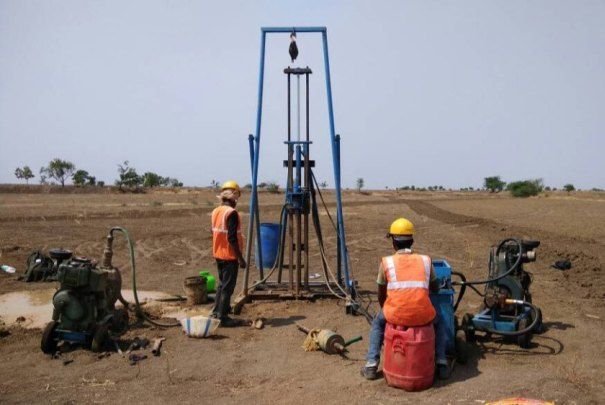
- Subsurface exploration, typically involving boreholes, test pits, or Cone Penetration Testing to characterize soil and rock conditions across the site.
- Laboratory testing of recovered samples to determine engineering properties relevant to foundation design.
- Groundwater assessment, including measurement of water table depth and, where relevant, seasonal fluctuation.
- Seismic and geohazard evaluation, addressing site-specific seismic design parameters and any other relevant hazards such as flood or slope stability risk.
- Geotechnical report and foundation recommendations, providing the engineering basis for foundation design, site grading, and drainage planning.
Common Pitfalls in BESS Site Development
Projects run into avoidable difficulty when geotechnical and geohazard considerations are treated as a late-stage compliance checkbox rather than an early input into site selection and design. Common issues include: selecting sites based primarily on interconnection proximity without adequately screening for geological constraints, underestimating foundation costs on sites with poor soil conditions, discovering flood or seismic hazard issues late in permitting that require costly redesign, and inadequate groundwater assessment leading to unexpected dewatering costs during construction.
Each of these is generally far cheaper to identify and address during early site screening and geotechnical investigation than after committing to detailed engineering design or, worse, after construction has begun.
Why This Matters More as BESS Scales
As battery storage capacity continues to grow globally and facility sizes increase, the consequences of inadequate site assessment scale accordingly — larger facilities mean larger foundation systems, greater sensitivity to differential settlement across a bigger footprint, and higher stakes if a geohazard issue is discovered late in development. At the same time, competition for suitable, grid-connected land is pushing some developers toward more geologically challenging sites than were typically considered in the earlier years of BESS deployment, making rigorous geoscience input more valuable, not less, as the industry matures.
Partnering with the Right Geoscience Team
A geoconsulting team experienced in BESS and broader energy infrastructure projects can help developers screen candidate sites efficiently, design an appropriately scoped geotechnical investigation, and navigate the geohazard considerations that increasingly factor into permitting and financing decisions. Bringing this expertise in early — during site selection rather than after a site has been locked in — is consistently the most effective way to avoid costly surprises later in development.
Developing a BESS project and need geotechnical or site hazard assessment support? Our team can help you screen sites, scope investigations, and navigate the geoscience considerations your project needs to move forward with confidence. Get in touch to discuss your site.