Skip to content
A borehole that produced good water at commissioning and stops producing two years later isn’t usually a mystery — it’s almost always the predictable result of a specific, identifiable cause, one that a properly conducted survey and construction process could have anticipated and prevented. Understanding why boreholes actually fail is as important as understanding how to site and drill one correctly in the first place, because prevention is consistently cheaper and more reliable than after-the-fact rehabilitation.
Defining Borehole Failure
“Failure” covers a wider range of outcomes than simply a borehole running completely dry. In practice, borehole problems typically fall into a few categories: complete dryness (no water was ever intersected in usable quantity), yield decline (water production drops significantly over time), water quality deterioration (previously acceptable water becomes contaminated or develops unacceptable chemistry), and structural failure (casing collapse, screen blockage, or other mechanical breakdown that prevents the well from functioning even where water remains available).
Cause 1: Inadequate Siting Investigation
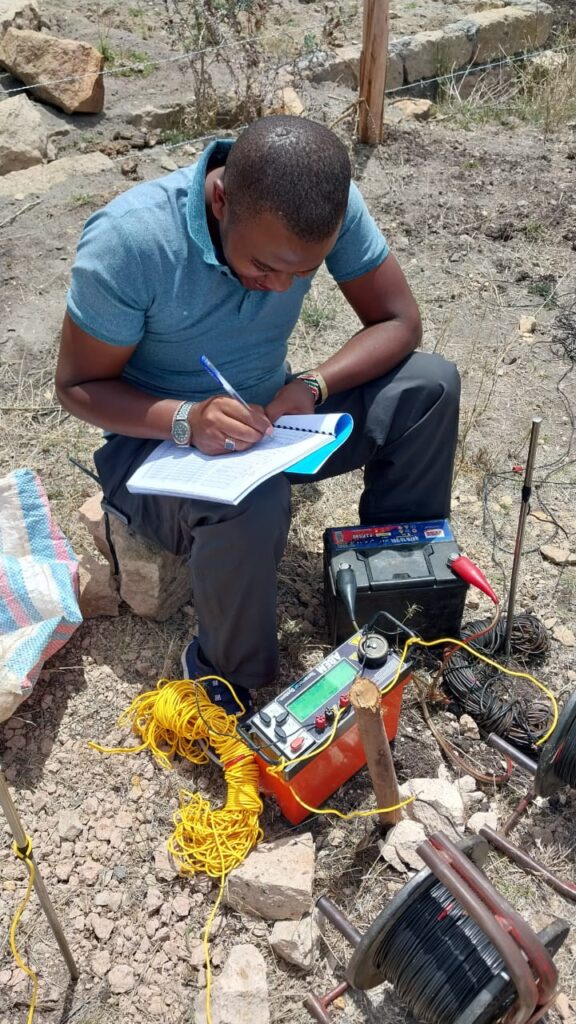
By far the most common root cause of a dry or poorly performing borehole is inadequate investigation before drilling — sites chosen based on convenience, local anecdote, or minimal geological assessment rather than a proper desk study, field mapping, and geophysical survey. In structurally controlled aquifers, such as fractured crystalline basement, a borehole drilled even a short distance from a productive fracture zone can be entirely dry, despite seemingly similar surface conditions — a risk that thorough geophysical investigation exists specifically to reduce.
Prevention: Follow the full hydrogeological survey methodology, with particular attention to geophysical characterization in structurally controlled settings, rather than relying on surface geology or informal local knowledge alone.
Cause 2: Over-Pumping Beyond Sustainable Yield
A borehole can be perfectly well-sited and constructed and still fail if it’s subsequently pumped at a rate exceeding what a proper pumping test would have identified as sustainable. Over time, this can cause progressive water level decline, eventually dropping below the pump intake or the screen interval entirely, and in coastal or certain other settings, can induce water quality problems like saline intrusion as the cone of depression draws in less desirable water from surrounding areas.
Prevention: Conduct a properly designed constant-rate pumping test of adequate duration (typically 24-72 hours) to establish genuine sustainable yield, and ensure the installed pump and operational pumping regime respect that limit — including accounting for cumulative demand from any nearby wells drawing on the same aquifer.
Cause 3: Screen and Gravel Pack Clogging
Over time, fine sediment, mineral precipitation (particularly iron and manganese oxides in certain groundwater chemistries), or biological growth (biofouling from iron-related bacteria, for instance) can progressively clog well screens and the surrounding gravel pack, restricting water flow into the borehole and causing gradual yield decline even where the aquifer itself remains capable of sustaining higher production.
Prevention: Proper screen slot sizing and gravel pack design matched to aquifer grain size during construction reduces the risk of fine sediment ingress; periodic well maintenance, including mechanical or chemical rehabilitation techniques, can restore some lost capacity in wells affected by clogging, though prevention through good initial design remains far more cost-effective than remediation.
Cause 4: Poor Construction Quality
Even a well-sited borehole can fail due to construction defects — inadequate grouting that leaves a pathway for surface contamination to reach the aquifer, poorly installed casing joints that allow sediment ingress, or casing material mismatched to actual groundwater chemistry, leading to premature corrosion. These issues often aren’t apparent immediately, surfacing only months or years into a borehole’s operational life.
Prevention: Proper construction supervision during drilling, using materials matched to site-specific water chemistry and geological conditions, with particular attention to grouting quality in the annular space near the surface to prevent contamination ingress.
Cause 5: Mechanical and Equipment Failure
Distinct from aquifer-related problems, boreholes can also fail due to straightforward equipment issues — pump wear and eventual failure, casing corrosion or collapse in aggressive water chemistry, or electrical and mechanical faults in pumping infrastructure. While not strictly a hydrogeological problem, these failures are common enough, and often confused with aquifer depletion by non-specialists, that they deserve explicit consideration in any borehole failure diagnosis.
Prevention: Select pump and casing materials appropriate to actual site water chemistry (which underscores the value of thorough water quality testing during the original survey), and establish a routine maintenance schedule rather than waiting for failure to prompt inspection.
Cause 6: Regional Recharge Decline
In some cases, a borehole that performed well for years can experience genuine yield decline due to broader regional factors — declining rainfall trends, increased cumulative groundwater abstraction from multiple wells sharing an aquifer, or long-term climate-driven changes to recharge patterns. This is distinct from a siting or construction failure; it reflects a genuine change in the aquifer’s water balance over time.
Prevention: Design sustainable yield estimates with reasonable conservatism rather than pushing for maximum theoretical output, and where feasible, monitor regional groundwater trends (through tools like satellite-based storage monitoring or coordinated local well monitoring) to anticipate broader shifts before they manifest as acute local failure.
Diagnosing an Existing Failed Borehole
When an existing borehole fails, correctly diagnosing the cause matters enormously for determining the appropriate fix — rehabilitating a clogged screen requires an entirely different intervention than addressing over-pumping or a genuine regional recharge decline. A proper diagnosis typically involves reviewing original construction and pumping test records where available, conducting current water level and yield testing for comparison against baseline data, and where relevant, video inspection of the well interior to assess screen condition and identify clogging or structural issues directly.
The Bottom Line
Borehole failure is rarely a matter of bad luck — it’s almost always traceable to a specific, preventable cause rooted in inadequate survey investigation, poor construction, or unsustainable operation. The consistent lesson across every failure mode discussed here is the same one that runs through proper hydrogeological practice generally: the upfront investment in thorough siting, honest sustainable yield assessment, and quality construction is dramatically cheaper than the cost of failure, rehabilitation, or outright abandonment down the line.