Skip to content

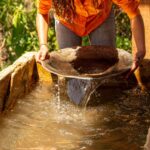
Across Kakamega, Vihiga, Migori and other counties, thousands of people earn a living by digging, crushing and washing gold-bearing rock using simple tools. This is artisanal mining. It is an important source of income in rural Kenya, yet it is also associated with safety hazards, mercury pollution and land disputes. A clear understanding of the geology behind the activity and the rules that govern it is essential for miners, cooperatives, landowners and investors alike.
What Counts as Artisanal Mining in Kenya
The Mining Act, 2016 defines artisanal mining as traditional and customary mining operations that use traditional or customary ways and means. In practice, this means manual methods, hand tools, small-scale processing and little mechanisation. It is distinct from small-scale mining, which involves permits with larger areas and requires more formal programmes, and from large-scale mining, which is carried out under prospecting and mining licences by companies with significant technical and financial resources.
The distinction matters because each category has its own permit type, eligibility rules and obligations.
The Geology Behind Artisanal Gold
Artisanal gold in western Kenya is closely tied to the Archaean greenstone belts of the Tanzania Craton. Gold originated in quartz veins and sheared volcanic and sedimentary rocks, deposited by hot fluids moving along faults and shear zones deep in the crust. Several features make this gold easy for artisanal miners to reach.
Deep weathering. In a warm, humid climate, rocks weather to great depths. Quartz veins remain as resistant fragments while the surrounding rock decomposes into soft saprolite. Gold released from sulphide minerals during weathering becomes free and easily recoverable.
Shallow, concentrated mineralisation. Oxidation and leaching can enrich gold near the surface, producing zones that look richer than the unweathered rock beneath.
Eluvial and alluvial deposits. Gold shed from outcropping veins accumulates in soils on slopes (eluvial deposits) and in streams and river gravels (alluvial deposits), where it can be recovered by panning and sluicing.
Visible gold in veins. Coarse gold is sometimes visible in quartz, allowing hand sorting and simple crushing.
These conditions explain why artisanal activity tends to cluster around known greenstone belts, particularly in Kakamega and Vihiga and in the Migori and Transmara areas.
How Artisanal Gold Is Mined and Processed
Typical workflows are straightforward.
- Prospecting. Miners follow quartz float, panning anomalies and local knowledge to find productive ground.
- Digging. Shallow pits and narrow shafts follow veins or gold-bearing soils. Depth is often limited by groundwater and by the risk of collapse.
- Crushing and milling. Rock is broken with hammers and ground in small mills or stamp mills.
- Concentration. Panning, sluice boxes or shaking tables use gravity to separate heavy gold from lighter material.
- Recovery. In many places mercury is added to the concentrate to form an amalgam, which is then heated to drive off the mercury and leave gold.
Recovery rates are often low, with substantial gold lost in tailings, which is why reprocessing of old tailings is sometimes attractive.
Risks: Safety, Health and Environment
Artisanal mining carries serious risks, and responsible regulation and technical support aim to reduce them.
- Ground collapse. Unsupported pits and shafts in weathered ground can fail without warning.
- Mercury exposure. Burning amalgam releases toxic mercury vapour, which damages the nervous system. Mercury also contaminates water and food chains. Kenya is a party to the Minamata Convention on Mercury, which commits countries to reduce and where feasible eliminate mercury use in artisanal gold mining.
- Dust and silica. Crushing quartz produces fine silica dust that can cause lung disease.
- Water pollution and erosion. Washing and sluicing increases sediment loads in streams, and poorly managed pits leave open holes and degraded land.
- Child labour and social risks. These are common concerns in informal mining areas and are addressed by labour law and by community programmes.
Better practices include gravity-only concentration, retorts and mercury-free methods such as borax-assisted smelting, proper shaft support, dust control, safe water management and reclamation of pits after use.
The Legal Framework
The core legislation is the Mining Act, 2016, supported by regulations such as the Mining (Licence and Permit) Regulations, 2017. Several provisions are particularly relevant to artisanal miners.
Ownership of minerals. All minerals belong to the Republic and are held by the national government in trust for the people of Kenya. No one may search for or mine minerals without a licence or permit.
County offices and committees. The Act provides for offices of the Ministry in counties and for an Artisanal Mining Committee in each county. The county office is responsible for functions such as processing artisanal mining permits, maintaining a register of artisanal miners and supporting the formation of cooperatives or associations.
Artisanal mining permit. The Act sets out qualifications for applicants and the duration of the permit. Permits are intended for Kenyan citizens and are granted for the mineral specified in the application. Many permits go to groups or cooperatives, and the available secondary sources indicate a term of a few years with the possibility of renewal. Permit terms, areas and fees should always be confirmed against the current text of the Act, regulations and fee schedule, as they can be amended.
Land access. A permit does not override land rights. Miners need the consent of the landowner or the relevant community or county authority, and where land is not a designated artisanal mining area, agreement on access and compensation is required.
Dealing in minerals. Buying, selling and exporting gold requires mineral dealer licences and export permits under the Act and the Dealings in Minerals Regulations. Selling through informal channels exposes miners to lower prices and legal risk.
Royalties and taxes. The Act provides for royalties payable on mineral sales at rates set by regulation, and the distribution of royalties among national government, county government and communities is set out in the Act.
Environmental and Safety Obligations
Artisanal miners remain subject to the Environmental Management and Co-ordination Act and its regulations, to water laws and to the Occupational Safety and Health Act. Mining activity must not pollute water sources, and mine sites should be rehabilitated. County and national agencies, including the National Environment Management Authority and the Water Resources Authority, have regulatory roles.
Policy Debates and Ongoing Reform
Artisanal mining is the subject of continuing policy discussion. Reviews of the mining laws have noted concerns about how artisanal mining is defined, the capacity of county offices and the need to better connect artisanal miners to formal markets. Amendment bills have been tabled in Parliament, including proposals on royalty sharing with counties and communities. Anyone relying on current rules should check the latest legal position and consult a lawyer or the relevant authority.
Pathways to Formalisation and Better Practice
For miners and groups looking to formalise and improve returns, practical steps include:
- Organise into a registered group, association or cooperative with clear rules.
- Check the online mining cadastre and county office for available ground and existing licences.
- Apply for the appropriate permit and agree access terms with landowners.
- Use basic geological guidance to decide where to dig, such as mapping vein orientation and sampling soils, rather than digging at random.
- Adopt mercury-free or mercury-reduced processing and proper safety equipment.
- Sell through licensed dealers to obtain fair prices and a legal paper trail.
- Keep records and comply with reporting, royalty and environmental obligations.
How Geology Can Support Artisanal Miners
Geologists can add real value to artisanal operations. Simple structural mapping shows which direction veins strike and dip, helping miners follow them efficiently. Soil sampling and trenching identify extensions of known veins. Geophysical surveys can trace shear zones beneath cover. Metallurgical testing can show whether gravity recovery is adequate or whether a modest processing plant could improve recoveries without mercury. When artisanal activity reveals a larger system, it can also lead to partnerships with licensed explorers, provided that the rights and benefits of miners and communities are respected in agreements.
Conclusion
Artisanal gold mining in Kenya rests on genuine geological opportunity, particularly in the deeply weathered greenstone belts of the west. Its future depends on combining that opportunity with sound regulation, safer and cleaner methods, access to fair markets and reliable technical support. Miners who understand their legal rights and obligations, and who use basic geological principles to guide their work, are better placed to build safer and more productive operations that benefit their communities for many years.