Skip to content


A borehole is one of the largest single investments many households, farms and businesses make in water security. The hydrogeologist you hire influences where you drill, how deep, what permits you need, how much you spend and whether you end up with clean, reliable water. A skilled professional can save you hundreds of thousands of shillings. An unqualified one can cost you far more.
There is no official “best hydrogeologist” ranking in Kenya, and anyone claiming to be the best should be asked for evidence. What you can do is identify the best hydrogeologist for your project by checking qualifications, local experience, methods, independence and communication. This guide shows you how.
What Does a Hydrogeologist Do?
A hydrogeologist is a scientist who studies groundwater: its occurrence, movement, quantity and quality. For a typical borehole project, a hydrogeologist will:
- Review geological maps, satellite imagery and borehole records.
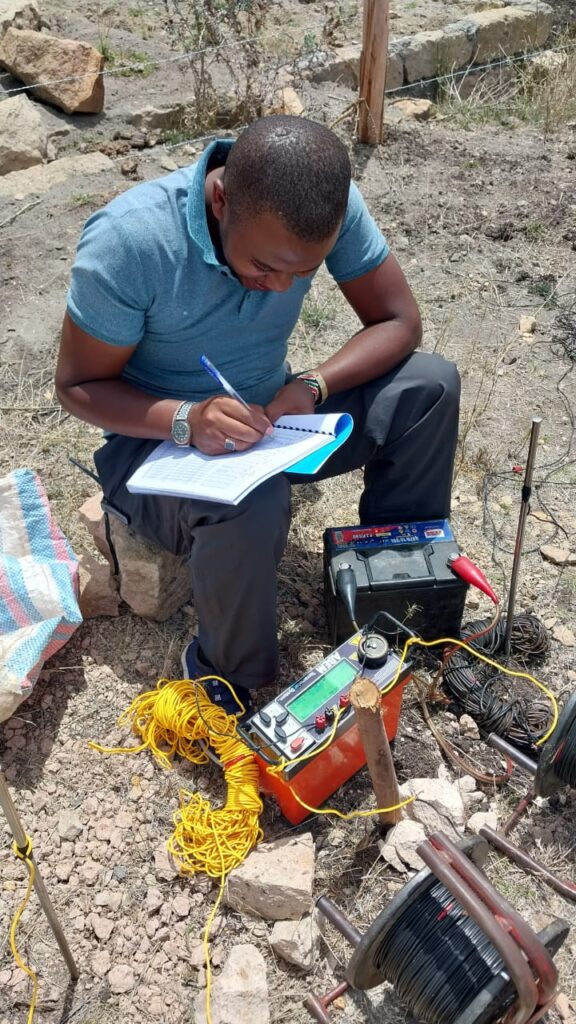
- Conduct field reconnaissance and geophysical surveys such as VES.
- Recommend drilling locations and expected depth and yield.
- Prepare a report that supports regulatory applications.
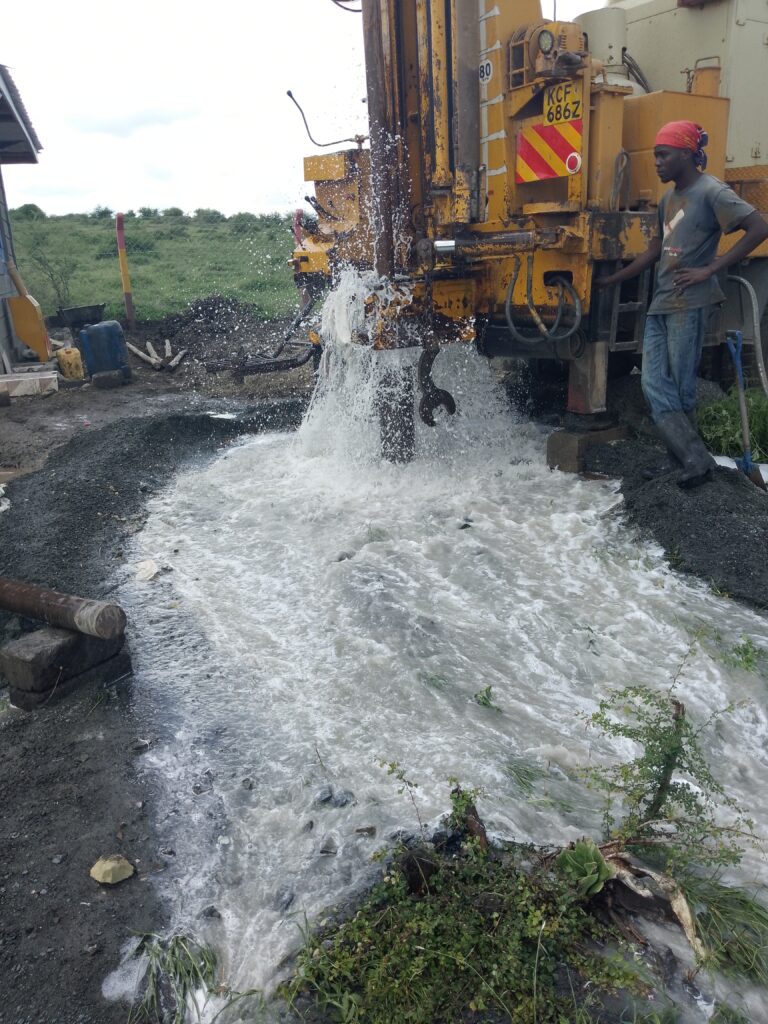
- Advise on borehole design, supervise drilling and interpret drilling logs.
- Interpret test pumping data and recommend a safe pumping rate.
- Advise on water quality, treatment and sustainable management.
- Help with permits from the Water Resources Authority (WRA), NEMA and county authorities.
On larger projects, such as commercial farms, industrial plants or town water supplies, hydrogeologists also carry out aquifer assessments, groundwater modelling, monitoring and long-term management plans.
Hydrogeologist, Geologist, Engineer or Driller: Who Does What?
Confusion about roles leads to poor hiring decisions:
- Hydrogeologist: specialist in groundwater science and exploration. Typically holds a degree in geology, hydrogeology or a related earth science, often with postgraduate training.
- Geologist: studies rocks and earth processes. Many hydrogeologists begin as geologists, and a geologist with water experience can carry out surveys.
- Water or civil engineer: designs water supply systems, pumping, storage and distribution. Needed for the engineering side after the water source is secured.
- Drilling contractor: physically drills and constructs the borehole. Must be licensed by WRA.
The best arrangement is to have an independent hydrogeologist advise on siting and design, and a licensed drilling contractor build it. Independence matters because a driller paid per metre may be tempted to drill deeper than needed, while a hydrogeologist paid for a report has an incentive to give the right advice.
Seven Criteria for Choosing a Hydrogeologist
1. Qualifications and professional standing. Look for a relevant university degree in geology, hydrogeology or earth sciences. Membership of a professional body such as the Geological Society of Kenya (GSK) shows commitment to professional standards. Ask about registration or recognition by the relevant regulators, and verify that the consultant can prepare reports acceptable to the Water Resources Authority. Rules on registration can change, so confirm current requirements with WRA.
2. Local experience. Kenya’s geology changes dramatically across short distances. A consultant with experience in volcanic terrain around Nairobi may not know the fracture-controlled basement aquifers of Machakos, or the fluoride-prone Rift Valley aquifers of Nakuru. Ask how many boreholes the consultant has sited in your area and what the success rates were.
3. Scientific methods. A credible hydrogeologist uses a combination of geological mapping, remote sensing, electrical resistivity or other geophysics, and review of borehole records. Be cautious of anyone who relies solely on dowsing, “feelings” or unexplained gadgets. Our article on water divining versus scientific surveys explains why.
4. Quality of reports. Ask for a sample report (with client details removed). It should include maps, coordinates, data, interpretation, expected depth and yield ranges, water quality risks and limitations. A single-page note with a drilling spot marked on a plan is not a hydrogeological report.
5. Honesty about uncertainty. Groundwater is never certain. A trustworthy consultant gives ranges and explains risks. Promises of “100 percent guaranteed water” are a red flag.
6. Independence and transparency. Clarify whether the consultant has financial ties to a drilling company. Ask how fees are structured. Fixed fees for defined scopes are easier to compare than vague or percentage-based arrangements.
7. Communication and support. A good consultant explains findings in plain language, answers questions, helps you read quotations and supports you through permits and drilling supervision.
Questions to Ask Before You Hire
- What is your educational background and professional membership?
- How many boreholes have you sited in this county or geological setting?
- Which methods will you use on my site, and how many geophysical stations?
- Will you review existing borehole records near my plot?
- What will the final report contain, and will it meet WRA requirements?
- What yield and depth range do you expect, and how confident are you?
- Can you supervise drilling and interpret the drilling log and test pumping?
- How do you handle water quality risks such as fluoride or salinity?
- What is your fee, what does it include, and what is the timeline?
- Can you provide references from recent clients?
Understanding Fees
Hydrogeological survey fees in Kenya generally range from about KSh 15,000 for basic site work to KSh 150,000 or more for comprehensive surveys and reports, with larger multi-site or advanced geophysical studies costing more. Prices depend on location, number of measurement points, report scope and any permit support. See our dedicated article on hydrogeological survey costs for a breakdown.
A very low price can signal minimal work, such as a single resistivity reading with no report. A very high price does not guarantee quality either. Compare what you get for the fee rather than the number alone.
Red Flags to Avoid
- Guaranteed results. Nobody can guarantee a borehole will strike water or deliver a particular yield.
- No written report. Verbal advice leaves you without evidence for permits or disputes.
- Pressure to skip permits. Legal compliance protects you.
- Unexplained methods. If the consultant cannot explain what is being measured and why, be cautious.
- Unrealistic depth or yield claims without data.
- No local references or portfolio.
- Insistence on using their drilling company with no option to compare quotes, and without disclosing the relationship.
- Payment demands upfront for the entire drilling cost before work begins.
Matching the Consultant to Your Project Type
Domestic borehole (home or small compound). You need a consultant who can provide a cost-effective site survey, a clear recommendation and permit-ready report. Water quality advice, especially in fluoride-prone regions, is valuable.
Commercial farm, horticulture or flower farm. You need someone who can assess sustainable yield for large-volume irrigation, advise on multiple boreholes, conduct test pumping interpretation and support abstraction permit applications and monitoring. See our article on borehole costs for commercial horticulture.
Institutions (schools, hospitals, factories). You need rigorous documentation, risk assessment, water quality planning and long-term monitoring.
Arid and semi-arid regions and humanitarian projects. You need experience in regional hydrogeology, recharge assessment, saline groundwater and community water supply design, as in Kakuma and northern Kenya.
Mining and construction dewatering. You need specialists in groundwater control and environmental compliance, often with modelling expertise.
The Value of Integrated Geoscience Expertise
Groundwater does not exist in isolation from geology. A consultant who combines hydrogeology with structural geology, geological mapping, GIS and remote sensing can identify faults and fracture zones that control groundwater, map recharge areas and integrate multiple datasets into a coherent model. In fractured hard rock and complex volcanic terrain, structural interpretation can make the difference between a productive and a dry borehole.
Integrated expertise also helps beyond drilling. For example, geotechnical knowledge helps design sand dams and foundations for water towers, while environmental knowledge supports EIA requirements.
How to Compare Proposals
Create a simple comparison table with these headings:
| Item | Consultant A | Consultant B | Consultant C |
|---|---|---|---|
| Fee and what is included | |||
| Methods and number of stations | |||
| Report contents | |||
| Permit support | |||
| Drilling supervision | |||
| Timeline | |||
| Relevant local experience | |||
| References |
Score each on value, not just price. Often the second-cheapest option with the strongest scope offers the best value.
Working Well With Your Hydrogeologist
- Share information: plot plans, titles, existing structures, latrine and septic tank locations, and any existing boreholes or wells.
- State your water needs clearly, including peak demand and growth plans.
- Be present or represented during the survey if possible, to understand constraints.
- Ask for a briefing when you receive the report.
- Involve the consultant in contractor selection and quotation review.
- Keep all documents, including reports, logs, test data, permits and water analyses.
After the Survey: The Role of Supervision
Many borehole failures are not siting failures but construction failures: wrong casing placement, poor gravel packing, inadequate development or skipped test pumping. Having your hydrogeologist, or at least a competent geologist, on site during drilling helps ensure the design is followed, the log is accurate and the borehole is correctly completed. This supervision is typically a small cost relative to the benefit.
Frequently Asked Questions
Can I rely on my driller’s survey? Some drillers offer competent surveys, but independence has value. Consider an independent hydrogeologist, or at least have the report reviewed.
Is it better to hire a local or a national firm? Local knowledge is crucial, but a national firm with strong data and experience in your type of geology can also perform well. Evaluate on evidence, not size.
How soon can I get a survey done? Field work can often be scheduled within days to a couple of weeks, with reports following shortly, depending on scope and demand.
Do I need a hydrogeologist for a very small borehole? Yes, because the cost of failure is still high and the regulatory process requires technical documentation.
What if the hydrogeologist says my site is poor? That is useful. You can look at alternatives such as relocating on your plot, shallower options with treatment, rainwater harvesting or utility supply.
Conclusion
The best hydrogeologist for your project is the one who combines solid qualifications, local geological experience, sound scientific methods, honest communication and transparent pricing. Ask for credentials and sample reports, compare scopes rather than just prices, avoid guarantees and prioritise independence. Investing time in choosing well will pay off every day your borehole runs.
To discuss your project with a professional geologist offering hydrogeological surveys, geophysics, structural geology and GIS services, contact Reg. Geol. Mbugua Githae (MGSK) through consult.innercoregeoconsultants.co.ke or call the numbers listed on the website.