Skip to content
Water resources are among the most valuable natural assets on Earth. Effective water management requires accurate and continuous monitoring of groundwater, rivers, reservoirs, and environmental conditions. However, traditional water monitoring methods often rely on manual measurements that are time-consuming, costly, and limited in frequency.
The emergence of Internet of Things (IoT) technology has revolutionized water monitoring systems. By integrating sensors, wireless communication, and cloud-based analytics, IoT allows water resources to be monitored remotely in real time.
For hydrogeologists, environmental consultants, and water resource managers, IoT-based monitoring systems provide a powerful tool for improving data collection, resource management, and environmental protection.
How IoT Water Monitoring Works
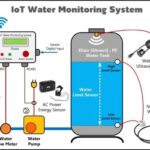
IoT water monitoring systems consist of three main components: sensors, communication networks, and data platforms.
Sensors installed in water bodies or boreholes measure parameters such as water level, flow rate, temperature, pH, and conductivity. These sensors transmit data through wireless communication networks to cloud-based platforms where the information is stored and analyzed.
Users can access the data through online dashboards, mobile applications, or automated reports.
Groundwater Monitoring
Groundwater is a critical source of drinking water and agricultural irrigation in many parts of the world. IoT-enabled groundwater monitoring systems allow hydrogeologists to track water levels and aquifer conditions continuously.
Sensors installed in boreholes measure water depth and transmit the information automatically. This real-time data helps experts understand seasonal changes, recharge patterns, and long-term groundwater trends.
In regions where groundwater overexploitation is a concern, continuous monitoring helps authorities implement sustainable extraction policies.
Water Quality Monitoring
Water quality is essential for public health and environmental sustainability. IoT sensors can measure important water quality parameters including pH, turbidity, dissolved oxygen, and electrical conductivity.
Real-time monitoring allows early detection of contamination from industrial pollution, agricultural runoff, or sewage discharge. If abnormal water quality levels are detected, authorities can take immediate action to protect communities and ecosystems.
This technology is particularly valuable for monitoring drinking water sources and protecting public health.
More examples: DOWNLOAD HERE.
Flood Monitoring and Early Warning Systems
Floods are among the most destructive natural disasters worldwide. IoT-based water level sensors installed in rivers and reservoirs can monitor rising water levels continuously.
When water levels approach critical thresholds, automated alerts can be sent to authorities and communities. Early warning systems allow people to evacuate and implement protective measures before flooding occurs.
These systems are especially important in regions that experience seasonal rainfall and flash floods.
Smart Irrigation and Agricultural Water Management
IoT water monitoring systems are also widely used in agriculture. Soil moisture sensors and water flow meters help farmers optimize irrigation practices.
By monitoring soil moisture levels and weather conditions, irrigation systems can be automated to deliver water only when needed. This reduces water waste and improves crop productivity.
Advantages of IoT Water Monitoring
IoT technology offers several important advantages in water resource management:
-
Continuous and accurate data collection
-
Reduced need for manual field inspections
-
Faster detection of water quality problems
-
Improved water conservation strategies
-
Better planning and management of water resources
Future Developments in Smart Water Systems
The future of water monitoring lies in the integration of IoT with advanced technologies such as artificial intelligence, satellite remote sensing, and big data analytics.
These technologies will allow scientists to develop predictive models for water availability, drought conditions, and flood risks. Combined with IoT monitoring networks, they will provide powerful tools for sustainable water resource management.
As climate change increases pressure on water resources, remote monitoring systems will become essential for ensuring water security and environmental protection.
IoT in Mining: READ HERE.