Skip to content
African nations face a distinct energy challenge. Electricity demand is growing quickly as economies expand and populations gain access to power for the first time, but the continent also has an opportunity that many industrialized nations never had: the chance to build out generation capacity using renewable technologies from the start, rather than retrofitting an existing fossil-fuel-based grid. Among the leading renewable options, geothermal, solar, and wind each bring distinct advantages and limitations. Understanding how they compare helps explain why most successful national energy strategies rely on a mix of all three, rather than betting everything on a single technology.
Reliability and Baseload Capacity
Perhaps the most significant difference between these three technologies lies in their reliability profile.
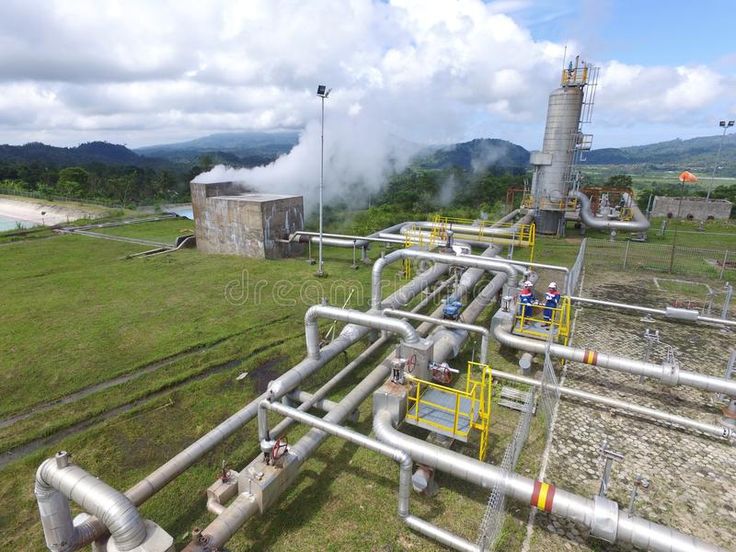
Geothermal energy offers what’s known as baseload power, meaning it can generate electricity consistently around the clock, regardless of weather or time of day. Once a geothermal field is developed, it typically operates with capacity factors of 80 to 90 percent, among the highest of any power generation technology, renewable or otherwise. This makes geothermal uniquely valuable for grid stability, since it doesn’t require the backup capacity or storage systems needed to smooth out intermittent generation.
Solar power, by contrast, is inherently intermittent. It generates electricity only during daylight hours, with output further affected by cloud cover and seasonal variation in day length. Typical capacity factors for solar installations in East Africa range from around 18 to 25 percent, depending on location and technology.
Wind power sits somewhere in between, with output dependent on wind speed and consistency, which varies significantly by site and season. Well-sited wind farms, particularly in areas with strong, consistent wind resources like parts of northern Kenya, can achieve capacity factors of 35 to 45 percent, notably better than typical solar performance but still well below geothermal.
Upfront Costs and Development Risk
The cost and risk profile of these three technologies differs substantially, and this has significant implications for financing and project timelines.
Geothermal projects carry the highest upfront exploration and development risk of the three. Before a single megawatt of capacity is confirmed, developers must invest heavily in exploration surveys and exploratory drilling, with no guarantee that a promising site will yield a commercially viable resource. This risk, combined with typically long development timelines of five to ten years from initial exploration to commercial operation, makes geothermal projects more challenging to finance, particularly for private developers without government backing to absorb early-stage risk.
Solar power, in contrast, has become remarkably fast and low-risk to deploy. Once a site is secured and grid connection arrangements are in place, utility-scale solar farms can often be constructed within 12 to 18 months, with well-understood technology and predictable performance based on solar resource data. Costs for solar panels have fallen dramatically over the past decade, making it one of the most cost-competitive generation technologies available today.
Wind power development timelines and risk profiles sit between solar and geothermal, generally faster to deploy than geothermal but requiring more careful site assessment than solar, particularly around wind resource variability and potential environmental impacts on bird and bat populations.
Land Use Considerations
Land requirements vary considerably across these three technologies, which matters significantly in regions where land use competes with agriculture, conservation, or community settlement.
Geothermal power plants have a comparatively small physical footprint relative to their generation capacity. A geothermal facility generating 100 megawatts typically requires far less land than an equivalent solar or wind installation, since the energy is extracted from deep underground rather than harvested from surface conditions.
Solar farms require substantial land area, particularly for utility-scale installations, since panel output is directly tied to surface area exposed to sunlight. This can create tension in densely populated or agriculturally productive regions, though this can be partially mitigated through approaches like agrivoltaics, which combine solar generation with compatible agricultural use on the same land.
Wind farms also require significant land area, though the actual footprint of turbine foundations and access roads is relatively small, allowing much of the land beneath and around turbines to remain available for grazing or agricultural use, provided setback distances from communities are properly maintained.
Regional Suitability Across Africa
Geographic and geological factors significantly influence which of these technologies makes most sense in a given location.
Geothermal potential is concentrated almost entirely along the East African Rift System, spanning countries including Kenya, Ethiopia, Djibouti, Tanzania, and Uganda. Outside this rift zone, geothermal resources suitable for commercial power generation are largely absent across the rest of the continent, making it a regionally specific rather than universally applicable technology.
Solar potential, by contrast, is exceptional across nearly the entire African continent, which receives some of the highest levels of solar irradiance in the world. This makes solar a broadly applicable option across virtually every African nation, regardless of geological setting.
Wind potential varies considerably by location, with the strongest resources typically found in coastal areas, highland regions, and specific corridors shaped by local topography, such as the Turkana corridor in northern Kenya, which benefits from a natural wind funnel effect between highland areas.
Environmental and Social Considerations
Each technology carries its own set of environmental and social considerations that must be managed responsibly.
Geothermal development requires careful management of fluid disposal, gas emissions, and potential impacts on protected areas, given that many geothermal fields are located within or near ecologically sensitive volcanic landscapes.
Solar installations, while low-impact during operation, raise considerations around land use displacement and the environmental footprint of panel manufacturing and eventual disposal or recycling at end of life.
Wind farms must carefully consider impacts on bird and bat populations, as well as noise and visual impacts on nearby communities, factors that influence appropriate siting decisions.
Why the Answer Is Usually “All of the Above”
Rather than viewing these technologies as competing alternatives, the most effective national energy strategies treat geothermal, solar, and wind as complementary components of a diversified grid. Geothermal provides reliable baseload capacity that doesn’t fluctuate with weather conditions. Solar offers fast, cost-effective capacity additions that can be deployed relatively quickly to meet growing demand. Wind adds further diversification, often generating strongest output during different periods than solar, helping smooth out overall renewable generation across the day.
For countries fortunate enough to sit on productive geothermal resources, like those along the East African Rift, geothermal’s baseload reliability offers a genuine strategic advantage that neighboring countries without similar geology simply don’t have access to. But even resource-rich nations like Kenya continue investing in solar and wind alongside geothermal, recognizing that a diversified generation mix ultimately provides greater grid resilience and flexibility than reliance on any single technology, however reliable it might individually be.
The path forward for African energy development isn’t about choosing a winner among these renewable technologies. It’s about understanding each one’s strengths, matching them to local geographic and geological realities, and building an integrated system where they work together to deliver reliable, affordable, and genuinely sustainable power.