Skip to content
Every gemstone on a jeweler’s tray represents an extraordinary coincidence of geological conditions — the right chemistry, the right pressure, the right temperature, held stable for long enough, in a setting that eventually brought the crystal close enough to the surface to be found. Understanding how that coincidence happens is not just academically interesting; it’s the foundation for knowing where to look for gemstones in the first place.
The Basic Ingredients: Chemistry, Pressure, Temperature, Time
A gemstone is, at its core, a mineral crystal that grew large enough, clear enough, and durable enough to be cut and polished. What separates an ordinary mineral grain from a gem-quality crystal comes down to four variables working together:
Chemistry — the right elements need to be present in the right proportions. Corundum (the mineral behind ruby and sapphire) is essentially pure aluminum oxide; trace chromium turns it red (ruby), while trace iron and titanium turn it blue (sapphire).
Pressure and temperature — different minerals are stable only within specific pressure-temperature windows. Diamond, for instance, requires the extreme pressure found roughly 150–200 kilometers deep in the mantle, where temperatures reach 900–1300°C.
Time — crystal growth is slow. Gem-quality crystals typically need long, geologically stable periods, undisturbed by fracturing or rapid temperature change, to grow large and free of internal flaws.
A pathway to the surface — a crystal that forms deep in the crust or mantle is worthless to a jeweler unless geological processes eventually bring it close enough to the surface to be mined.
The Main Formation Environments
Igneous Environments
Many gemstones crystallize directly from magma as it cools, or from the fluids and vapors that separate from magma late in its crystallization history.
Pegmatites — coarse-grained igneous rocks that form from the last, water- and rare-element-enriched fraction of a crystallizing magma — are responsible for many of the world’s colored gemstones, including tourmaline, aquamarine and other beryls, topaz, and spodumene varieties like kunzite. The slow cooling and element-rich fluids in pegmatites allow unusually large, well-formed crystals to grow.
Kimberlites and lamproites are the primary source rocks for diamonds. These unusual, rapidly ascending magmas originate deep in the mantle and act as elevators, carrying diamonds that formed under stable deep conditions upward through the crust before they have time to convert back to graphite.
Metamorphic Environments
When existing rocks are subjected to intense heat and pressure — without melting — new mineral assemblages form, and some of these produce gem-quality crystals. Ruby and sapphire frequently form in metamorphosed limestones (marbles) or in metamorphic rocks that have undergone the right combination of aluminum-rich chemistry and high-grade metamorphism. Emerald, a beryl variety colored green by trace chromium or vanadium, often forms where beryllium-rich pegmatite fluids interact with chromium-bearing metamorphic rocks — a specific and relatively rare geochemical meeting that explains why fine emerald deposits are so much scarcer globally than other beryl varieties.
Hydrothermal Environments
Hot, mineral-rich fluids circulating through fractures and cavities in rock can precipitate gem crystals as they cool or as their chemistry changes. Many quartz varieties (amethyst, citrine), as well as some emerald and topaz deposits, form this way, often lining cavities (geodes) or veins.
Sedimentary and Placer Environments
Gemstones don’t have to be mined from their original host rock. Weathering and erosion release durable, dense gem minerals from their parent rock, and rivers and coastal currents concentrate them into placer deposits — much as they do with gold. Because gem minerals like diamond, ruby, sapphire, and garnet are chemically resistant and dense, they survive long transport distances and accumulate in gravel beds, making alluvial and placer deposits some of the most economically important gemstone sources worldwide, including much of East Africa’s colored stone production.
Why Gem-Quality Crystals Are So Rare
Most crystals that form in these environments are small, fractured, or clouded with inclusions — perfectly good mineral specimens, but not gem material. Gem quality requires the crystal to have grown large enough to yield a cuttable stone, clear enough (or attractively included, in some cases) to be visually appealing, and durable enough to withstand cutting and daily wear. Because each of these conditions has to align simultaneously, and because the geological environments capable of producing them are themselves uncommon, gem-quality material typically represents a vanishingly small fraction of the host rock volume — part of why gemstones command the value they do.
Why This Matters for Exploration
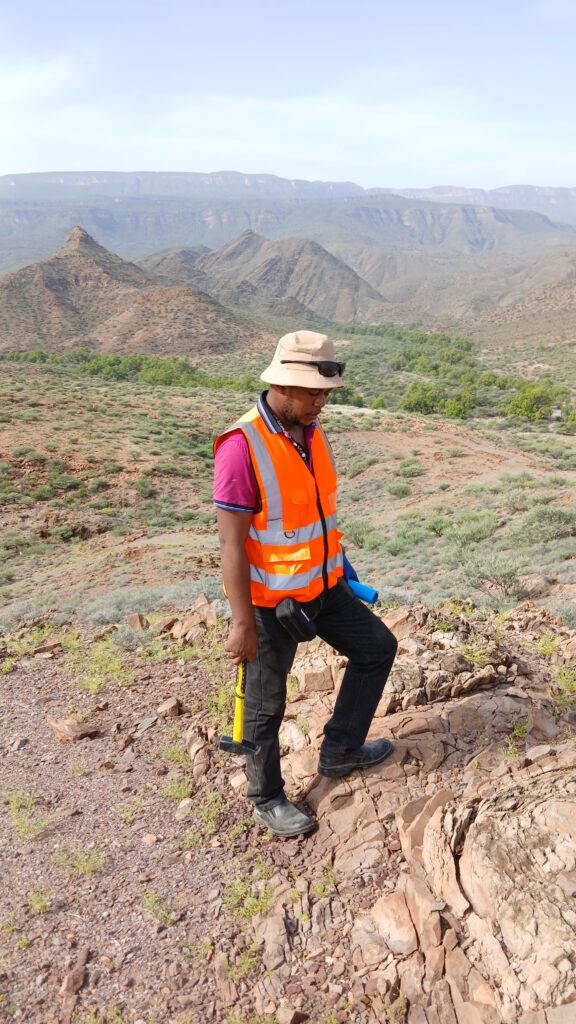
Understanding formation environments is directly practical for exploration geologists and small-scale miners alike. Knowing that emerald requires a specific meeting of beryllium-rich and chromium-rich rock types, for instance, narrows the search to specific geological contacts rather than broad regions. Similarly, recognizing that placer deposits concentrate durable gem minerals downstream of their source means that alluvial sampling can sometimes locate economic gemstone concentrations even when the primary host rock has never been identified or is uneconomic to mine directly.
The Bottom Line
Gemstone formation is a study in geological improbability — the right elements, conditions, and timing converging in specific, identifiable settings. That specificity is exactly what makes gemstone exploration a tractable geological problem rather than a matter of chance: understanding the formation environment is the first and most important step toward knowing where to look.