Skip to content
“Water” as a subject sounds simple enough, but the science behind it splits into distinct disciplines depending on where that water sits — on the surface or beneath it. Hydrology and hydrogeology are closely related fields that are often confused, sometimes used interchangeably, and occasionally treated as one and the same by clients scoping a project. They’re not. Understanding the difference matters, because getting the wrong specialist involved — or missing one entirely — can leave real gaps in a project’s water-related risk assessment.
This guide breaks down what separates hydrology from hydrogeology, where their work overlaps, and how to know which discipline (or both) your project actually needs.
The Core Distinction
Hydrology is the study of water in the environment above and on the surface of the ground — rainfall, rivers, lakes, wetlands, snowmelt, evaporation, and the broader water cycle as it moves across landscapes and into surface water bodies. Hydrologists focus on surface water flow, flood behavior, watershed dynamics, and the interaction between precipitation and runoff.
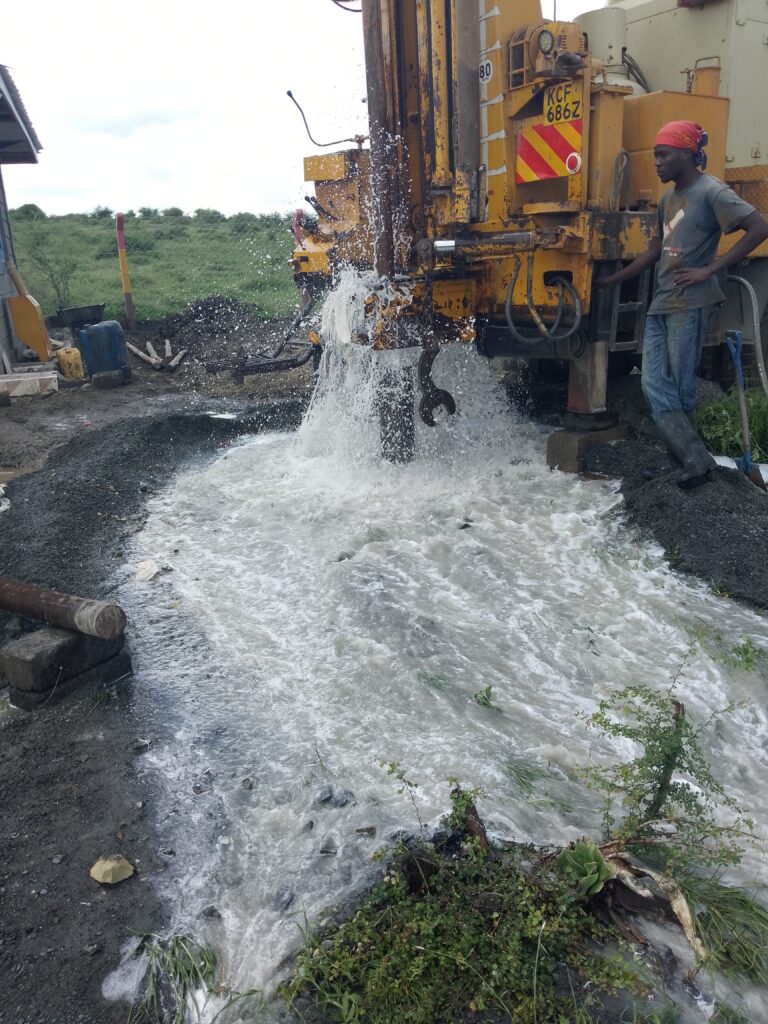
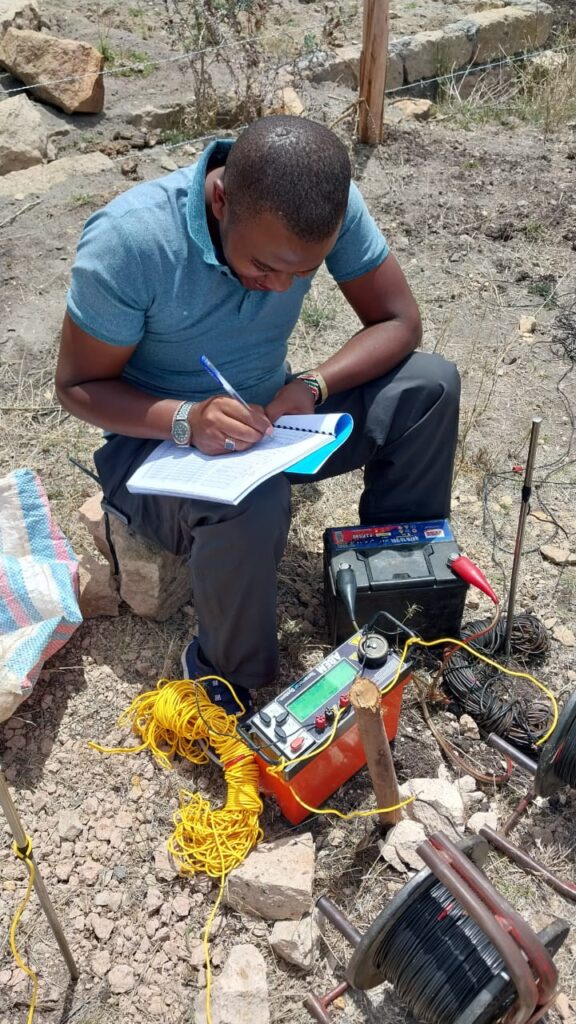
Hydrogeology (sometimes called geohydrology) is the study of water beneath the surface — how it moves through soil and rock, how aquifers store and transmit groundwater, and how subsurface geology controls water availability, quality, and flow. Hydrogeologists focus on groundwater systems: aquifers, wells, springs, and the geological structures that govern how water behaves underground.
Put simply: hydrology deals with water you can see moving across the landscape; hydrogeology deals with water moving through rock and soil where you can’t see it at all, and depends heavily on geological training to interpret it correctly.
Why the Distinction Matters
Different Underlying Expertise
Hydrology draws heavily on meteorology, fluid mechanics, and watershed-scale statistical analysis — understanding rainfall-runoff relationships, flood frequency, and surface water routing. Hydrogeology draws heavily on geology — understanding rock and soil permeability, aquifer structure, fault and fracture behavior, and the geological history that shaped the subsurface systems water moves through today.
This means the two disciplines, while related, require genuinely different technical backgrounds. A hydrologist without geological training may not be well positioned to characterize a fractured bedrock aquifer, just as a hydrogeologist without hydrological training may not be the right fit for designing stormwater drainage infrastructure or modeling flood risk along a river corridor.
Different Project Applications
Because they address different physical systems, hydrology and hydrogeology tend to show up in different types of projects — though, as covered below, many projects need both.
Typical hydrology applications:
- Flood risk assessment and floodplain mapping
- Stormwater management and drainage design
- Watershed and catchment modeling
- Surface water quality monitoring
- River and stream restoration
- Reservoir and dam design (surface water components)
Typical hydrogeology applications:
- Groundwater supply assessment and well design
- Aquifer testing and sustainable yield analysis
- Contaminated site groundwater investigation
- Dewatering design for mining and construction
- Septic system and on-site wastewater suitability
- Groundwater-dependent ecosystem assessment
Where the Two Disciplines Overlap
Surface water and groundwater aren’t actually separate systems in nature — they’re connected, and this connection is exactly where hydrology and hydrogeology most often need to work together.
Baseflow contribution. Many rivers and streams receive a significant portion of their flow from groundwater discharge, particularly during dry periods when surface runoff is minimal. Understanding a watershed’s flow behavior often requires hydrogeological input to properly account for this groundwater contribution.
Groundwater recharge. Precipitation that doesn’t run off as surface flow infiltrates into the ground, eventually recharging aquifers. Estimating recharge rates — a fundamentally hydrogeological question — depends on hydrological data about rainfall patterns and surface runoff behavior.
Wetlands and groundwater-dependent ecosystems. Many wetlands, springs, and riparian ecosystems are sustained by groundwater discharge, meaning their assessment genuinely requires both surface water and groundwater expertise working in tandem.
Flood and groundwater interaction. During major flood events, elevated river levels can drive water into adjacent aquifers, while high groundwater levels can reduce a watershed’s capacity to absorb additional rainfall, increasing flood risk. Comprehensive flood risk assessment in some settings genuinely requires understanding both sides of this interaction.
Contamination pathways. A contaminant released at the surface may travel through both surface water and groundwater pathways, sometimes moving between the two as it migrates from a source area, requiring integrated understanding of both systems to properly assess exposure risk and design remediation.
A Practical Example: Why Projects Often Need Both
Consider a proposed development near a river, in an area also relying on groundwater wells for water supply. A hydrologist would assess flood risk from the river, stormwater runoff generated by the new development’s impervious surfaces, and how the project might alter surface drainage patterns. A hydrogeologist would separately assess whether the local aquifer can sustainably support the development’s water demand, whether the development’s septic or wastewater systems are appropriate for local groundwater conditions, and whether construction activity — like dewatering during excavation — might affect nearby wells.
Missing either half of this picture leaves a real gap. A project cleared on flood risk grounds could still face a failed water supply assessment, or vice versa — and regulators increasingly expect both dimensions to be addressed, particularly for larger developments.
How to Know Which Specialist You Need
A few practical questions can help clarify which discipline — or combination — applies to your project:
- Is the primary concern above ground or below it? Flooding, drainage, and river-related questions point to hydrology. Wells, aquifers, and subsurface water quality point to hydrogeology.
- Does your project involve construction dewatering, on-site wastewater, or groundwater supply? These almost always require hydrogeological input.
- Does your project involve stormwater management, floodplain development, or watershed-scale planning? These typically call for hydrological expertise.
- Is your site near a river, wetland, or other surface water feature and also reliant on or near groundwater resources? This is a strong signal that both disciplines should be involved, given the likely surface water-groundwater interaction.
When in doubt, it’s worth raising the question directly with a consulting team early in project scoping — a well-scoped project should clearly identify whether it needs hydrological assessment, hydrogeological assessment, or an integrated approach covering both, rather than defaulting to whichever specialist happens to be easiest to engage.
The Value of an Integrated Team
Given how frequently surface water and groundwater systems interact, many of the most robust water-related assessments come from teams that can draw on both hydrological and hydrogeological expertise under one roof, rather than coordinating between entirely separate consultants working in isolation. This integrated approach tends to catch interactions between surface and subsurface water systems that might otherwise fall through the gap between two narrowly scoped, disconnected studies.
Not sure whether your project needs hydrology, hydrogeology, or both? Our team can help you scope the right assessment from the start. Get in touch to discuss your site and water-related risks.