Skip to content
Beneath the surface of the Earth lies a source of heat so vast and so constant that it has the potential to power entire nations without burning a single drop of fossil fuel. That source is geothermal energy, and while it has been used in various forms for thousands of years, it remains one of the most underutilized renewable resources on the planet. Understanding what geothermal energy actually is, and how it gets converted into usable power, is the first step toward appreciating why it is becoming such a critical part of the global energy transition.
The Basic Science Behind Geothermal Energy
Geothermal energy comes from heat stored within the Earth. This heat originates from two main sources: the residual heat left over from the planet’s formation roughly 4.5 billion years ago, and the ongoing decay of radioactive isotopes such as uranium, thorium, and potassium in the Earth’s crust and mantle. As you move deeper into the Earth, temperatures rise steadily, a phenomenon known as the geothermal gradient. On average, temperatures increase by about 25 to 30 degrees Celsius for every kilometer of depth, though this rate varies significantly depending on tectonic activity in the region.
In areas where the Earth’s crust is thinner or where tectonic plates meet, such as along rift valleys or volcanic zones, this heat is much closer to the surface. These are the regions where geothermal energy becomes economically viable to extract, because drilling doesn’t need to go nearly as deep to reach usable temperatures.
How Geothermal Systems Actually Work
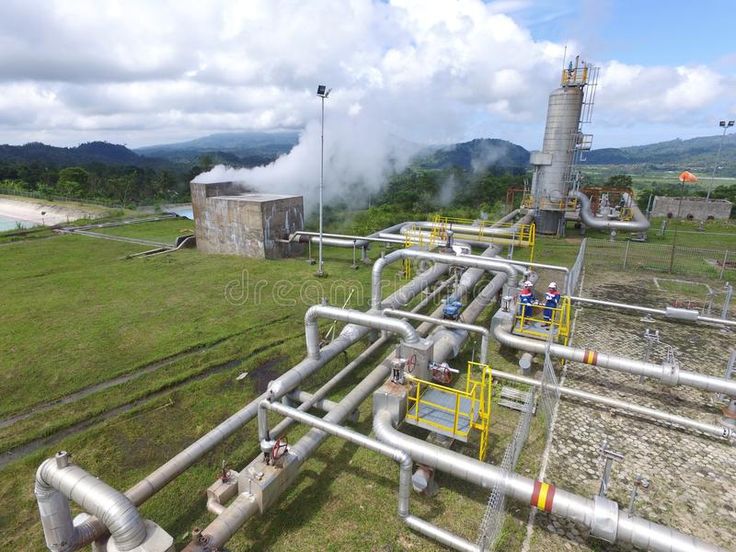
At its core, a geothermal energy system works by tapping into naturally heated water or steam trapped in underground reservoirs. When wells are drilled into these reservoirs, hot water or steam rises to the surface under its own pressure or with the help of pumps. This steam is then used to spin turbines connected to generators, producing electricity in much the same way a traditional power plant does, except without combustion.
There are three primary types of geothermal power plants, each suited to different resource conditions:
Dry steam plants use steam directly from the reservoir to turn the turbine. These are the oldest type of geothermal plant and require a resource that produces steam with very little liquid water content.
Flash steam plants are the most common type in use today. They pull high-pressure hot water from deep underground and allow it to “flash” into steam as pressure drops, which then drives the turbine. Any remaining water is typically reinjected into the reservoir.
Binary cycle plants work with lower-temperature resources. Instead of using the geothermal fluid directly, this fluid is passed through a heat exchanger to warm a secondary fluid with a lower boiling point. That secondary fluid vaporizes and drives the turbine, while the original geothermal water is reinjected without ever coming into direct contact with the turbine system. Binary plants have expanded the range of geothermal resources that can be economically tapped, because they don’t require extremely high reservoir temperatures.
Beyond Electricity: Direct Use Applications
Not all geothermal energy is converted into electricity. In many parts of the world, geothermal heat is used directly for heating buildings, greenhouses, and even entire district heating networks. Iceland is a well-known example, where a significant share of homes are heated using geothermal hot water piped directly from underground sources. Geothermal heat pumps, which take advantage of the relatively stable temperatures found just a few meters below the surface, are also widely used for residential and commercial heating and cooling, even in regions without high-temperature geothermal reservoirs.
Industrial applications are growing too. Geothermal heat is increasingly used in food processing, timber drying, and even lithium extraction from geothermal brines, adding another layer of value to geothermal resource development beyond power generation alone.
Why Geothermal Matters for the Energy Transition
Unlike solar and wind, geothermal energy is not dependent on weather conditions or time of day. It provides what is known as baseload power, meaning it can generate electricity consistently, 24 hours a day, regardless of external conditions. This makes it an extremely valuable complement to intermittent renewables in a diversified energy grid.
Geothermal also has a relatively small physical footprint compared to other renewable energy sources. A geothermal plant requires far less land area per megawatt of capacity than an equivalent solar or wind farm, which matters in regions where land use conflicts with agriculture or conservation.
From an emissions standpoint, geothermal power plants produce a fraction of the greenhouse gases associated with fossil fuel plants. Emissions vary by resource and technology, but binary cycle plants in particular can operate as closed-loop systems with near-zero direct emissions, since the working fluid never contacts the atmosphere.
The Role of Exploration and Feasibility Studies
Despite its advantages, geothermal energy development is not without challenges. Unlike solar panels or wind turbines, which can largely be deployed based on surface conditions, geothermal projects require extensive subsurface investigation before a single well is drilled. This is where geoscientific consulting becomes essential. Resistivity surveys, geochemical sampling of surface features like hot springs and fumaroles, gravity and magnetic surveys, and eventually exploratory drilling are all used to characterize a geothermal resource before major capital is committed.
This upfront exploration phase carries significant financial risk, since there is no guarantee that a promising surface indicator translates into a commercially viable underground reservoir. It’s precisely because of this risk that experienced geoconsultants play such a critical role, helping developers and governments make informed decisions about where to invest, how deep to drill, and what technology is best suited to the resource at hand.
Geothermal Potential in East Africa
The East African Rift System is one of the most geologically active regions in the world, and it holds some of the greatest untapped geothermal potential on the planet. Countries like Kenya, Ethiopia, and Djibouti sit atop a resource base that, if fully developed, could meet a substantial share of the region’s growing electricity demand. Kenya in particular has emerged as a continental leader in geothermal development, with fields like Olkaria demonstrating what is possible when exploration, drilling, and power plant construction come together effectively.
As more countries in the region look to diversify their energy mix and reduce dependence on hydropower, which is increasingly vulnerable to drought, geothermal offers a stable, homegrown alternative. Realizing that potential, however, depends heavily on rigorous geoscientific groundwork, sound project planning, and consulting expertise that understands both the technical and regulatory landscape of geothermal development in the region.
Geothermal energy is not a new idea, but it is an increasingly important one. As the world searches for reliable, low-carbon sources of power, the heat beneath our feet is finally getting the attention it deserves.