Skip to content

Groundwater is a lifeline across Kenya’s Rift Valley, where rivers are scarce and many communities, farms and towns depend on boreholes. Yet in much of the Rift, groundwater naturally contains fluoride at concentrations far above safe limits for drinking. This is not pollution from industry or agriculture. It is a natural consequence of the region’s volcanic geology, heat and climate.
The World Health Organization guideline for fluoride in drinking water is 1.5 mg/L. A small amount of fluoride helps strengthen teeth, but prolonged intake above the guideline can cause fluorosis, a condition that affects teeth and, at higher exposures, bones. Understanding why fluoride is high and what can be done is essential for anyone drilling or using a borehole in the Rift Valley.
How Bad Is It? What the Data Show
Research and county monitoring show that elevated fluoride is widespread in the Kenyan Rift:
- A geological study of Nakuru County analysed data from 32 boreholes and found fluoride levels ranging from 0.5 to 72 mg/L, with a mean of about 11 mg/L. A large share of boreholes exceeded the WHO value. The study found the highest concentrations in aquifers on the hot rift floor and the lowest on the cooler, wetter escarpments.
- County authorities in Nakuru have reported high fluoride in groundwater in Naivasha, Njoro, Nakuru Town West, Gilgil, Nakuru East and Bahati. A county-commissioned analysis of fifteen boreholes found fluoride between about 2.15 and 6.5 mg/L.
- Regional assessments of the Central Rift Valley have found that a large majority of sampled water sources exceed 1.5 mg/L, with natural values reported up to roughly 75 mg/L in extreme cases.
- Lakes in the Rift can be extreme, with fluoride in the thousands of mg/L in saline-alkaline lakes such as Nakuru and Elmenteita, which is why lake water is never a drinking source.
- Kenyan health data cited by authorities suggest that millions of Kenyans are affected by fluorosis in some form.
Fluoride is not limited to Nakuru. High values are documented along the Rift from Baringo and Bogoria through Naivasha to Magadi and Kajiado, and in parts of the highlands and elsewhere with volcanic or fluoride-rich rocks. It also extends into northern Tanzania, where the same Rift geology produces the same problem.
Why Is Fluoride So High in the Rift Valley? The Geology and Chemistry
Several natural processes combine:
1. Fluoride-rich volcanic rocks. The Kenya Rift is a zone of intense volcanism. Alkaline volcanic rocks such as trachytes, phonolites and rhyolites, along with volcanic glass and ash, are naturally rich in fluoride. Minerals such as fluorite, apatite and micas, and fluoride held in volcanic glass, release fluoride when they dissolve.
2. Water-rock interaction and long residence time. Groundwater that spends a long time in contact with these rocks dissolves more fluoride. Groundwater on the rift floor typically has a long flow path from recharge zones on the highlands and a long residence time.
3. Alkaline, sodium-bicarbonate water chemistry. In rift groundwater, sodium and bicarbonate are dominant ions, and pH is often high. Under these conditions, calcium is low because it precipitates as calcite. Low calcium allows fluoride to stay dissolved, since the mineral fluorite (calcium fluoride) cannot form and remove it. Fluoride and sodium bicarbonate therefore rise together. High pH also promotes the release of fluoride that was adsorbed onto mineral surfaces.
4. Evaporative concentration. The hot, dry rift floor promotes evaporation, which concentrates dissolved ions in soil water and shallow groundwater. This is why research in Nakuru found highest fluoride on the hot rift floor and lower fluoride on the humid escarpments, where rainfall dilutes groundwater and residence time is short.
5. Geothermal influence. Hot fluids from geothermal systems are rich in fluoride and other elements. Mixing with groundwater near active geothermal areas can raise fluoride locally, including in areas around Olkaria, Longonot and Menengai.
6. Cation exchange. Exchange of calcium for sodium on clays can lower calcium in water, allowing more fluoride to remain in solution.
In short, the Rift has the source (fluoride-rich volcanic rocks), the conditions (alkaline, low-calcium water) and the concentration mechanism (heat and evaporation).
Health Effects of Excess Fluoride
Dental fluorosis. Occurs when children are exposed during tooth formation, usually up to about eight years of age. In mild cases it appears as white flecks or streaks on teeth. In moderate to severe cases, teeth become yellow, brown or black with pitting. It is a cosmetic and sometimes functional problem and is permanent.
Skeletal fluorosis. Results from long-term high intake. Symptoms begin with joint stiffness and pain, progress to calcification of ligaments, reduced joint mobility and bone deformities in severe cases. It can be disabling.
Other concerns. Research continues on possible effects on thyroid function, kidneys and neurodevelopment at high exposures. Livestock can also suffer fluorosis, affecting teeth, bones and productivity, which matters for farms and pastoralists.
Fluoride exposure also comes from food (such as tea, which accumulates fluoride, and some crops irrigated with fluoride-rich water), dust, toothpaste and magadi soda used in cooking in some communities. Total exposure matters, not just water.
Children, people with high water intake (hot climates, manual labour) and those with poor nutrition (especially low calcium) are more vulnerable.
How to Know If Your Borehole Has a Fluoride Problem
You cannot see or taste fluoride at concentrations that cause harm. The only way to know is laboratory testing. If you live or plan to drill in the Rift Valley, volcanic highlands or near geothermal areas, test for fluoride as a priority. Field fluoride kits provide rough estimates but laboratory confirmation is advised. Re-test periodically, since concentrations can change with pumping and season.
Observation of dental fluorosis in local children (mottled teeth) is a strong sign that local water has long contained excess fluoride.
Reducing Fluoride Risk Before You Drill
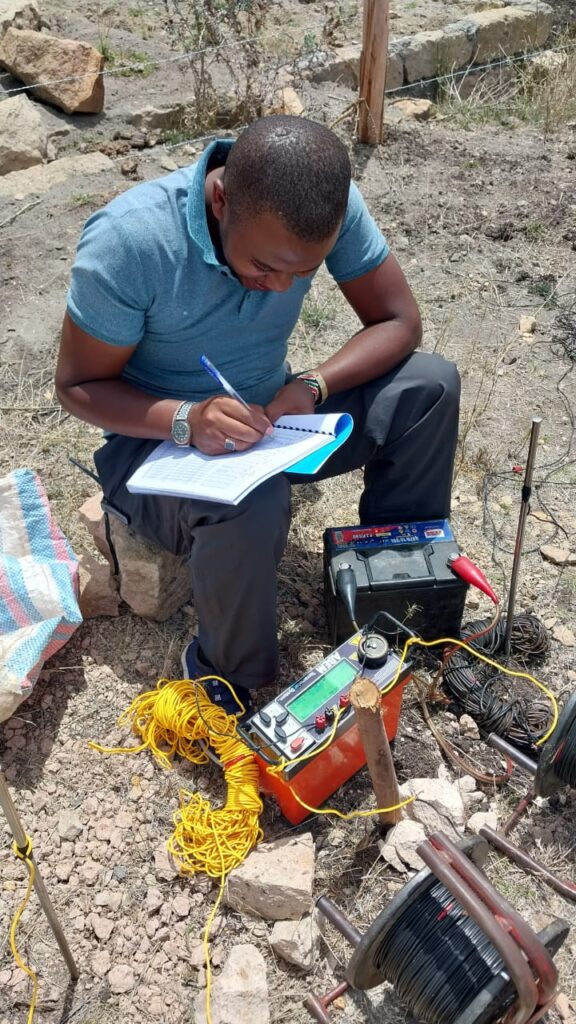
Prevention is easier than treatment. A good hydrogeological survey can reduce risk by:
- Reviewing water quality data from nearby boreholes to see local fluoride patterns.
- Siting closer to recharge zones and escarpments, where research suggests fluoride is lower because of rainfall dilution and shorter residence time, if yield and other factors allow.
- Targeting aquifer horizons with better quality. In layered volcanic systems, different depths can have different chemistry. Selective screening and sealing off high-fluoride zones may help, if the geology supports it.
- Avoiding geothermal-influenced zones where fluoride may be especially high.
- Planning for treatment from the start, including budget and space, if high fluoride is likely.
Water quality should be assessed during drilling and test pumping, with samples taken from different depths where feasible, to guide decisions.
Solutions for Fluoride-Contaminated Water
There is no single best solution. The right option depends on fluoride concentration, volume needed, budget, technical capacity and maintenance.
1. Switch to a safer source.
- Rainwater harvesting for drinking and cooking is effective because rainwater is essentially fluoride-free. See our article comparing rainwater and boreholes.
- Surface water or piped supply from low-fluoride sources, such as in the Naivasha area where a World Bank-supported project aims to supply fluoride-free water from the Malewa River to residents who rely on high-fluoride boreholes.
- Alternative aquifers or boreholes at other depths or locations with lower fluoride.
2. Blending. Mixing high-fluoride groundwater with low-fluoride water (rainwater, surface water or another borehole) can bring the mixture below the guideline. It needs reliable low-fluoride supply and monitoring.
3. Treatment technologies (defluoridation).
- Activated alumina: adsorbs fluoride onto alumina media. Effective, with regeneration or replacement required. Performance depends on pH and competing ions.
- Bone char: a traditional adsorbent made from charred animal bones, used in community and household filters in East Africa. Acceptability can be an issue for some communities, and quality control matters.
- Reverse osmosis (RO) and nano-filtration: membranes remove fluoride along with other salts. Effective but require pressure (energy), pre-treatment, maintenance and disposal of reject brine.
- Electrodialysis and ion exchange: used in some larger systems.
- Contact precipitation and coagulation methods (such as the Nalgonda technique, using alum and lime): used in community and household scales, requiring skilled operation and sludge management.
- Clay and other locally available adsorbents: under research and used in small-scale applications, but performance varies.
County reports in Nakuru describe defluoridation filters reducing fluoride from about 9 mg/L to below 1.5 mg/L in demonstration systems, illustrating that effective treatment is possible when well designed and maintained.
4. Point-of-use versus central treatment. Treating only drinking and cooking water at household level can be more economical than treating all water, since most water use (washing, toilets, irrigation) does not require low fluoride. Central treatment suits towns and institutions.
5. Nutrition and community education. Adequate calcium, vitamin C and general nutrition reduce the impact of fluoride exposure. Education on alternative water sources, tea consumption and food preparation can help. This complements, but does not replace, reducing fluoride in water.
Practical Considerations When Choosing a Treatment
- Know your fluoride concentration and other water chemistry. High TDS, alkalinity and competing ions affect treatment performance.
- Calculate volume needs. Drinking and cooking may need only a few litres per person per day.
- Consider operation and maintenance. Filter media must be replaced or regenerated. Membranes require cleaning and replacement.
- Test treated water regularly to confirm it meets the guideline.
- Manage waste. Spent media and brine should be disposed of responsibly.
- Plan for costs including capital, consumables, labour and monitoring.
- Engage qualified professionals, because poorly designed systems can fail or give false security.
Implications for Farms and Businesses
Commercial borehole users in the Rift, including flower farms, dairies and horticulture, should assess fluoride in the context of worker and livestock health, crop sensitivity and product standards. Irrigation water with high fluoride and sodium may affect soil and some crops, and workers living on-site who drink borehole water are at risk. Include water quality assessment and treatment in project planning. See our article on borehole costs for commercial horticulture and flower farms.
Regulatory and Policy Context
Kenyan drinking water standards align broadly with the WHO guideline of 1.5 mg/L for fluoride. Counties such as Nakuru have started monitoring programmes and investing in alternative supplies and treatment plants. Individuals and enterprises should check current standards and permit conditions, and test water quality as part of compliance and risk management.
Frequently Asked Questions
Does boiling remove fluoride? No. Boiling concentrates fluoride as water evaporates.
Is fluoride in water always bad? At around 0.5 to 1.0 mg/L it can help prevent tooth decay. The problem is high concentrations over long periods.
Can I tell if water has fluoride by taste? No. You need a laboratory test.
Will drilling deeper reduce fluoride? Sometimes, sometimes not. Deeper aquifers can have longer residence times and higher fluoride, or different chemistry. Only data can tell you.
Are household filters from supermarkets effective? Ordinary carbon or sediment filters do not remove fluoride. Specialised media or membranes are needed.
Is it safe to bathe in high-fluoride water? Skin absorption is generally considered minor. The main risk is ingestion. Still, avoid using high-fluoride water for drinking, cooking and preparing infant formula.
Conclusion
Fluoride in Rift Valley groundwater is a natural, widespread and serious water quality issue rooted in the region’s volcanic geology, alkaline water chemistry and hot, dry climate. It can be managed through informed siting, testing, alternative sources, blending and effective treatment. The first step is to know your water: test for fluoride before you drink it, and before you invest in a borehole in the Rift.
For hydrogeological assessments that include water quality risk and siting guidance in fluoride-prone areas, contact Reg. Geol. Mbugua Githae (MGSK) through consult.innercoregeoconsultants.co.ke.